Author: Allyson Garner

Trump Administration’s “Public Charge” Policy Will Harm Moms and Babies in the U.S.
Last week, the Trump Administration announced they had finalized changes to a policy known as “public charge,” which would put individuals’ legal immigration status at risk if they use critical health, nutrition and other support programs. We believe this policy will make America sicker and poorer, targeting vulnerable immigrants and their families to promote a culture of fear.

For many years, the government has used a “public charge” test as part of the immigration process to identify people who are likely to depend on the government for support. If the government determines that a person is likely to become a public charge, it can deny them admission to the U.S. or lawful permanent residence (also known as green card status). The new policy expands the list of programs that can be considered when determining whether someone is likely to become a public charge, including certain health care, food and housing programs that provide critical support to families. The new policy also establishes standards for income, health, age and English proficiency for immigration officials to consider when evaluating an individual case.

 As a result of these changes, millions of legally-present immigrant families – including those with children who are U.S. citizens – may forgo the medical, nutrition and housing programs they need to keep their families safe and healthy out of fear of jeopardizing their immigration status. This will have particularly disastrous effects for pregnant women, babies and toddlers now and in the future.

We know that good nutrition and quality health care during pregnancy and early childhood play a foundational role in enabling a child to grow, learn and thrive. In addition, a growing body of scientific research indicates that the foundations for lifelong health—including predispositions to obesity and certain chronic diseases—are set during this period. This research also shows us that kids are healthiest when their parents are healthy. Children whose parents have access to adequate health care are more likely to be covered themselves and to receive regular checkups from a doctor. Without access to nutritious foods and medical care during the first 1,000 days, the health and wellbeing of women, children and their families are put at risk.

Unfortunately, some immigrant families have already turned away from critical public health programs. For example, while WIC is not among the programs included in the new rule, WIC agencies in at least 18 states say they’ve seen drops of up to 20% in enrollment, and they attribute the change largely to fears about the public charge policy. Without the support that these programs provide, many mothers and young children will be put at risk for malnutrition and serious health problems now and in the future.

Instead of making life more difficult for some of our country’s most vulnerable individuals, we must safeguard their nutrition, health and economic security.
1,000 Days’ Oral Comment for the Second Meeting of the 2020 Dietary Guidelines Advisory Committee

Thank you for the opportunity to provide comments at today’s meeting. My name is Lucy Sullivan and I am the Executive Director of 1,000 Days, the leading nonprofit organization working to ensure that women and children everywhere have the healthiest first 1,000 days.

The 1,000 days between a woman’s pregnancy and her child’s 2nd birthday are a window of opportunity to set the trajectory for a person’s lifelong health and build the foundation of a child’s brain and future potential. The first 1,000 days are also a time when food preferences and eating habits begin to take shape.

It is why we at 1,000 Days believe that the P-24 dietary guidelines can play a critical role in helping to build a healthier future for America. Not only are these the first-ever dietary guidelines for pregnant women and children under 2 in the U.S., they are the first-ever set anywhere in the world.

This is why the Committee must ensure these guidelines are based on the best, independent science and that these guidelines are protected from industry influence and interference. There is simply too much at stake for these particular guidelines to become a tool of private profit over public health. The integrity of these guidelines along with the transparency in the process to develop them are of paramount importance.

It is critical that the guidelines cover the following three areas:

  • First: Nutrition during pregnancy and lactation. This includes both foods to choose and foods to avoid and a message around eating twice as healthy, not twice as much. Expectant mothers want to know what foods are best for their health and their growing baby, not just nutrients.
  • Second: Consistent with long-standing recommendations from public health authorities such as the World Health Organization, the American College of Obstetricians and Gynecologists and the American Academy of Pediatrics, the guidelines must reinforce that breastfeeding is the best possible source of nutrition for infants and that infants should be breastfed exclusively for the first 6 months, followed by continued breastfeeding to at least one year with the addition of appropriate, nutritious complementary food. If breastfeeding is not available, human donor milk is the next best alternative, followed by infant formula if neither breastfeeding nor human milk feeding are available. It is essential that the guidelines also speak to the extraordinary health benefits of breastfeeding for mothers—reducing their risk of breast cancer, ovarian cancer, type 2 diabetes, and high blood pressure. Breastfeeding is also a key strategy to reduce America’s scandalous infant mortality rate. For example, breastfeeding protects against Sudden Infant Death Syndrome (SIDS), a leading cause of death among infants in the U.S., particularly black infants.
  • Third: Clear guidance on introducing a diverse diet of fruits, vegetables, meats and other complementary foods and the transition to the family diet.

We know that many Committee Members share our commitment to ensuring that every child in America has a healthy first 1,000 days and trust that the Committee will carry out their work with the utmost integrity and transparency. Thank you to all of the Committee members for their service and thank you for the opportunity to provide comment.

What We’re Watching in July

Returning from their Independence Day recess, we expect Congress to have a busy July before leaving for their annual August recess. Here are a few things we’ll be keeping our eye on this month:

Responding to the Crisis at the Border

Before leaving for their July recess, Congress passed emergency border funding. Since then reports have described unsafe and unsanitary conditions at facilities housing migrant children and adults: women held in rooms without clean drinking water, pregnant women without access to prenatal services, children without access to toothbrushes or soap and many people hungry and in need of health care. In addition, the Department of Homeland Security’s Office of Inspector General reported they found dangerous overcrowding among other serious issues. The House Committee on Oversight and Government Reform has announced hearings on the Administration’s repose to this crisis. 1,000 Days urges the Administration and Congress to immediately address this crisis and ensure the safety, nutrition, healthcare and other essential needs of migrant children and their families.

Progress on Child Nutrition Reauthorization

Chairman Pat Roberts (R-KS) has again signaled that he wants to move legislation to reauthorize the Child Nutrition Act, providing an opportunity to strengthen programs that serve moms, babies and young children such as the Special Supplemental Nutrition Program for Women, Infants and Children (WIC) and the Child and Adult Care Food Program (CACFP). 1,000 Days will continue to engage Congressional staff and key partners to ensure the nutrition of young children is a national priority.

Recognizing the importance of global maternal and child nutrition

Improving the health and nutrition of women and children around the world is getting increased attention in both the House and Senate. Representatives Roger Marshall (R-KS) and James McGovern (D-MA) and Senators Susan Collins (R-ME) and Chris Coons (D-DE) have introduced resolutions recognizing the importance of continued U.S. leadership to accelerate progress ending maternal and child malnutrition around the world. In addition, Senators Collins and Coons have also introduced the Reach Every Mother and Child Act to strengthen U.S. efforts to end preventable maternal and child deaths in developing countries. We appreciate Members’ leadership on these issues, and we will continue encouraging their colleagues to join them as co-sponsors.

Momentum is building for Paid Family and Medical Leave

On both sides of the U.S. Capital, Members are looking more closely at the issue of paid leave. This week, the House voted to add an amendment to the National Defense Authorization Act for Fiscal Year 2020 (H.R. 2500) providing paid family and medical leave for federal workers. In Senate, leaders have formed a bipartisan working group to examine the issue. 1,000 Days will continue to urge Members of Congress to support paid leave for all workers, while also lifting up the voices and stories of our moms and their families to show the real-world impact of having or not having access to paid leave.

Next steps on Appropriations

The House of Representatives has passed 10 of the 12 bills needed to fund the federal government after September. Many of the programs supporting pregnant women, parents and their children in the United States and around the world saw at least level funding or were increased, including:

While we are encouraged by the House’s action, it is unclear what will happen in the Senate. Majority Leader Mitch McConnell (R-KS) has indicated he wants the Senate’s appropriations markups to wait to until a budget agreement is reached among the White House, Senate and House. Without an agreement to raise the budget caps for FY 2020, many programs that support access to health and nutrition services for young children and families will face steep, automatic cuts. 1,000 Days will continue to keep a close watch on these budget negotiations and the impact to the programs that serve moms and young children.

June in Review: Building Healthier Futures in the First 1,000 Days

All month long we’ve been getting back to the basics on why the 1,000 days between a woman’s pregnancy and her child’s 2nd birthday are so important. Nutrition during this time plays a foundational role in promoting the health and well-being of women and their children. However, here in the U.S. and around the world, too many moms and babies are not getting the nutrition they need to thrive.

This month, a few bright spots have shown just how important the 1,000-day window of opportunity really is – and that healthier futures for moms and babies are possible. We’d like to highlight a couple.

Obesity rates fell among young children in the WIC program

New data from the U.S. Centers for Disease Control and Prevention (CDC) show that obesity is declining among young children enrolled in the Special Supplemental Nutrition Program for Women, Infants and Children (WIC). In 2010, approximately 16% of WIC 2-4-year-olds were obese, but this number fell to about 14% in 2016. Even though some groups of children are still more likely to be obese than others, the rates of obesity declined for children of all races/ethnicities.

Although the CDC does not measure obesity rates among the youngest WIC participants, the decline in obesity among 2-4-year-olds reflects the strong foundation that is being set during the first 1,000 days. More than 1 in 3 mothers in the U.S. receives food from WIC during pregnancy, and nearly half of all babies are served by WIC. Research shows that what we eat during pregnancy and the first 2 years of life sets the stage for lifelong eating habits and health.

WIC provides low-income families with critical assistance to help support their health and well-being. Moms and their children can receive healthy foods, nutrition counseling, breastfeeding support and referrals for other services – all of which can help them get the nutrition and care they need to be healthy and thriving now and in the future.

CDC highlighted the window of opportunity in the first 1,000 days

Also in June, the CDC shined a spotlight on the importance of nutrition in the first 1,000 days through their Public Health Grand Rounds. During the session, experts explored how a woman’s nutrition during the first 1,000 days can affect her own health and that of her child, identified strategies to support women to breastfeed and offered recommendations regarding an infant’s transition to the family diet.

Individuals from around the country – and the world! – tuned in to learn more. According to the CDC, the webcast event was viewed in 31 states and 25 foreign countries.

As part of the event, 1,000 Days’ Executive Director Lucy Sullivan was interviewed on how nutrition impacts moms and babies every day. She discussed weight gain during pregnancy, the benefits of breastfeeding for both mother and child and babies’ introductions to first foods. Want to hear more? The interview can be viewed here.

This month and every month, we have seen how powerful the first 1,000 days can be in building brighter, healthier futures.

The Effect of Food Insecurity on Families

A new fact sheet from the Urban Institute highlights an urgent problem for families across the United States: food insecurity. In many families, ensuring that infants and toddlers can eat means parents are skipping meals or even going without an entire day’s worth of food when there is not enough for everyone to eat.

Food insecurity can be defined as limited or uncertain access to nutritious food because of a lack of resources. Many families do not have the financial resources they need to meet the competing demands we all face – including payments for food, housing, medical care and other household necessities – which increases their risk for food insecurity. Families may experience food insecurity for a day, a week, a few months or more as their resources come and go.

Food insecurity is a serious problem among parents of our nation’s youngest children. According to the Urban Institute’s Well-Being and Basic Needs Survey, about half (50.9%) of low-income parents of infants and toddlers reported experiencing food insecurity in the 12 months before the survey, and more than half (54.2%) of these parents reported skipping meals or going without food for an entire day. This puts these families at risk.

Consistent access to nutritious food is essential during the first 1,000 days. Without enough nutrient-dense foods, children may not receive all the nutrients they need. As a result, food insecurity can inhibit healthy growth and cognitive development among infants and toddlers. Children experiencing food insecurity are also more likely to require frequent hospitalizations, experience developmental delays and be in poor health.

When parents reduce their own food intake to feed their young children, it impacts the whole family. According to the Urban Institute, caregivers who experience food insecurity, themselves, may be more prone to depression and have a lack of energy to nurture and engage with their children. Additionally, many caregivers experience distress when they and their children aren’t receiving the nutrition they need. Overall, food insecurity has devastating consequences for the families who experience it.

The Urban Institute offers four policy recommendations to support parents of infants and toddlers who are experiencing food insecurity:

  1. Expand food insecurity screenings during health care visits and check-ups as part of routine clinical procedures.
  2. Support federal nutrition programs such as SNAP and WIC that provide food assistance to low-income families.
  3. Increase SNAP and WIC uptake and purchasing power so that more families can receive the nutrition assistance they need.
  4. Pair healthy foods with family-friendly distribution strategies in the charitable feeding system so that healthy foods are made available in locations where families regularly visit, such as child care settings.

Making it easier for families to access to federal nutrition programs, such as SNAP and WIC, is one way to ensure parents and their children get the nutrition they need for a healthy first 1,000 days and beyond.

Blythe Thomas Named Chief Strategy Officer at 1,000 Days

Contact: Allyson Garner; [email protected]; 202.969.3366

WASHINGTON, D.C. (June 12, 2019) — Today 1,000 Days named Blythe Thomas Chief Strategy Officer of the nonpartisan nonprofit organization focused on making the well-being of women and children in the first 1,000 days a policy and funding priority.

In this role, Ms. Thomas will help grow the organization’s influence and shape the national dialogue with media, policymakers, partner organizations and parents. Executing the organization’s 2019-2021 strategic plan, Ms. Thomas will support fundraising, strategic planning, business development and a broad content strategy on issues related to food, nutrition, maternal, infant and young child health and development in the first 1,000 days.

“We are thrilled that Blythe is joining us to help lead the next phase of 1,000 Days’ growth. With her strong track record of success in the philanthropic and nonprofit worlds and her genuine passion for helping moms and babies thrive, Blythe will be integral to 1,000 Days achieving its ambitious advocacy agenda” said Lucy Sullivan, Executive Director of 1,000 Days.

Ms. Thomas is currently the Chief Marketing Officer at the Partnership for a Healthier America, a bipartisan nonprofit organization that works with the private sector to create better food and foster more movement for all American families. In this role, Ms. Thomas is responsible for the nonprofit’s brand management, media relations, digital and content strategy, celebrity engagement, signature events, development and marketing efforts. Blythe joined PHA in February 2016. She will begin her new role at 1,000 Days on July 8, 2019.

“Moms are some of the toughest humans on this planet, and when they are empowered, it positively effects everything around them. I am especially excited to join 1,000 Days, because it fights to build a strong foundation for mothers, children and their nations to thrive,” said Thomas.

Prior to PHA, Blythe was the Vice President of Communications for the Kansas Health Foundation. With an asset base of more than $500 million, the foundation distributes approximately $20 million in grants every year in support of its mission to improve the health of all Kansans.

Before the foundation, Blythe was the international director of marketing and public relations for The Nature Conservancy where she built global brand awareness through earned media strategies and partnerships; engaged celebrities and the entertainment industry to raise visibility and garner credibility; grew the pool of international Conservancy spokespeople; and led the PR efforts for the signature marketing campaigns.

For 10 years Blythe was at the American Red Cross National Headquarters, serving on the rapid response team following the 9/11 terrorist attacks and Hurricane Katrina. She spent half her time in communications and half in fundraising, where she worked as the chief of staff to the senior vice president of Growth and Integrated Development.

Blythe majored in Journalism and Broadcasting with a minor in Speech Communications, graduating with a Bachelor’s of Science from Oklahoma State University. She resides in Arlington, VA, with her two sons.

About 1,000 Days

1,000 Days leads the fight to give mothers and babies in the U.S. and around the world the nutrition they need to thrive. We work with global leaders and grassroots communities of parents to make the 1,000 days between a woman’s pregnancy and her child’s 2nd birthday a window of opportunity to build healthier, brighter futures. For more information, please visit www.ThousandDays.org and follow us on Twitter, Facebook, and Instagram.

CDC’s Grand Rounds on The Thousand Day Window

1,000 Days is honored to be a featured speaker at the CDC’s upcoming Grand Rounds to shine a spotlight on one of the biggest public health concerns facing our country: nutrition for moms and babies.

On Tuesday, June 18 from 1:00-2:00 pm EST, the U.S. Centers for Disease Control and Prevention (CDC) will present a Public Health Grand Rounds on “Maternal, Infant, and Early Childhood Nutrition—The Thousand Day Window of Opportunity.” One thousand days refers to the period from pregnancy through a child’s second birthday, when optimal nutrition is critical for brain development, healthy growth, and setting children on a trajectory for lifelong health.

During the Grand Rounds, an expert panel – led by Andrea Sharma an Epidemiologist with the Division of Nutrition, Physical Activity, and Obesity with the CDC, Michelle Kominiarek a physician with Northwestern University Feinberg School of Medicine, and Rafael Perez-Escamilla the Director of Yale School of Public Health – will explore how a woman’s nutrition during the first 1,000 days can impact both her own health and the child’s health, identify strategies that support women to breastfeed, and provide recommendations regarding an infant’s transition to the family diet. Together these factors have a profound impact on a child’s ability to grow, learn, and thrive.

Unfortunately, in the United States, optimal nutrition during the first 1000 days is not happening.

  • About 16% of pregnant women have iron deficiency, with significant disparities by race/ethnicity.
  • Almost 1 in 5 babies are never breastfed, and only 25% of infants are exclusively breastfed through 6 months.
  • Among children 12-23 months, on a given day, fewer than half have eaten a vegetable and 1 in 3 consume a sugary drink.
  • About 14% of U.S. children, aged 2-5 years, have obesity.

The CDC will use this key moment to uncover the science, statistics and research behind the state of the 1,000 days in the U.S. And they have invited 1,000 Days Executive Director Lucy Sullivan to be interviewed in a “Beyond the Data” segment that highlights the policies and practices impacting nutrition in the first 1,000 days and brings to light how these issues effect moms and babies.

Please join us for this live webcast to learn more about CDC’s role in Maternal, Infant and Early Childhood Nutrition.

We invite you to learn more about the state of the first 1,000 days in the U.S. View these resources to get started.

Guest Post: What Would it Look Like if We Protected Rather Than Just Promoted Breastfeeding?

Public health bodies are in agreement: Breastfeeding protects the health of mothers and babies and therefore breastfeeding should be encouraged. But what use is encouraging women to breastfeed if at every corner they face barriers in their way? At its least the simplistic ‘breast is best’ message is useless, and at its worst it can cause significant harm.

Messages urging women to breastfeed do nothing to enable them to do so. Although breastfeeding may be normal, it’s still something that mother and baby learn together, enhanced by skilled expert support. If we instill a belief in mothers that breastfeeding is important but then have little investment in giving them the best possible start, then that is inhumane. Too many women are starting out wanting to breastfeed and stopping way before they are ready through no fault of their own, leaving them with a whole host of negative emotions from guilt through to failure and anger.

We need to take a different approach to this public health issue by creating a culture that nurtures and protects rather than simply promotes breastfeeding. But what would that support look like? Some might argue that there is ‘pressure to breastfeed’ everywhere. But if you sit back, the subtle and not so subtle messages that women get everyday normalise bottle feeding, not breastmilk. With almost all mothers at some point using formula, copious advertising of breastmilk substitutes, and the normalisation of infant formula as a solution to breastfeeding challenges, we really live in a formula feeding culture.

What good is a desire to breastfeed if health services are not in place to guide and support mothers to get breastfeeding off to the best start and to support problems if they arise? What good is it if family and friends continually try to persuade the mother to give formula, particularly in response to normal baby behaviour that won’t get ‘fixed’ by a bottle? What good is it if the public harass her when she feeds outside the home? What good is it if she has to go back to work and her employer makes no adjustments at all? What good is it if she is continually pulled in all directions and urged to ‘get her life back’ rather than being nurtured and cared for through this transition?

If we want to encourage breastfeeding, we need to create an environment in which breastfeeding can flourish. We need to move our focus away from breastfeeding as an individual mothering issue and consider how we make changes at the social, economic, and political levels that allow breastfeeding to thrive. This means targeting the knowledge, attitudes and behaviours of family members, the general public, employers and those policy makers who have it in their power to make change on a grand scale. Breastfeeding is not the responsibility of the mother alone. It is a societal issue and a public health responsibility and our actions and investment should recognise that.

Dr Amy Brown is a Professor of Child Public Health at Swansea University in the UK where she researches how we can better understand what helps women to breastfeed for longer. She is author to three books: Breastfeeding Uncovered, The Positive Breastfeeding Book and Why Starting Solids Matters.

Why 1,000 Days

The 1,000 days between a woman’s pregnancy and her child’s 2nd birthday offer a unique window of opportunity to build healthier and more prosperous futures. A growing body of research shows that the nutrition and care a mother and her child receive during this time set the stage for their short – and long-term health and well-being. Specifically, the first 1,000 days are important for:

  • Building Brains
    Beginning in pregnancy and throughout early childhood, nutrition provides the building blocks for a child’s cognitive abilities, motor skills and socio-emotional development.
  • Building Health
    Nutrition in the first 1,000 days provides the foundation for lifelong health. It impacts how our bodies and immune systems develop and influences our predisposition to diseases later in life.
  • Building a Fair Start
    The first 1,000 days are a window of opportunity to build more equal beginnings and put all children on track to flourish. Evidence shows that when young children are well nourished, cared for and protected from disease, violence and toxic stress, they have the best chance at a thriving future.
  • Building Prosperity
    Nutrition during this period provides the foundation for children to develop to their full potential, setting them up for later success in school and the workforce and a healthy life. Investments in a child’s earliest years are one of the smartest things a country can do to combat poverty and create the human capital needed for economies to diversify and grow.

What Does a Healthy First 1,000 Days Look Like?

The nutrition and care that moms and babies need during every stage of the 1,000-day window looks slightly different. Using recommendations from WHO, AAP and other leading experts, 1,000 Days has identified 10 building blocks for nutrition during the first 1,000 Days.

What Is the Current State of the First 1,000 Days in the US?

By several measures, the US is failing its mothers and young children. The most recent statistics surrounding poverty, food insecurity, maternal mortality, healthcare access, paid leave access and more paint a troubling picture of how women and children go through the 1,000-day window.

  • Poverty
    One in five (1.6 million) infants and toddlers under age 2 in the United States live in poverty.
  • Food Insecurity
    16% of households with children under the age of six are food insecure, meaning they at times go without adequate food for one or more family members.
  • Health
    Currently, 1 in 12 children in the US are born with a low birthweight, putting them at risk for other health problems. At the same time, the US has one of the highest maternal mortality rates of any wealthy country, and black and American Indian/Alaska Native women are about 3 times as likely to die than white women. Additionally, women of childbearing age are consuming diets with too-few nutrient dense foods and too much saturated fat, added sugar and sodium, and half of women (51.4%) enter pregnancy overweight or obese. 1 in 4 children are overweight or obese by their 5th birthday, and 75% of 1-to-3-year-olds consume too much sodium.
  • Health Care
    Medicaid plays an important role in ensuring moms and babies get the care they need to thrive. Close to half of all births (43%) in the US are paid for by Medicaid, and Medicaid and CHIP currently covers 40% of US children aged 0-5. However, 12% of women ages 14-49 remain uninsured.
  • Nutrition Assistance Use
    Approximately 7.6 million women, infants, and children participate in the Special Supplemental Nutrition Program for Women, Infants and Children (WIC), and nearly half of all infants in the US are served by WIC. However, WIC doesn’t reach everyone who needs it: only 55% of the population who are eligible for WIC are participating. Millions of low-income families with young children also rely on the Supplemental Nutrition Assistance Program (SNAP) to put food on the table. About 2,172,000 households that participate in SNAP have children ages 0 to 1.
  • Breastfeeding
    Too many moms and babies are not benefiting from the powerful effects of breastfeeding. While 83.2% of infants born are ever breastfed, only 24.9% are breastfed exclusively through 6 months. Furthermore, 60% of mothers stated that they did not breastfeed for as long as they intended to, indicating a need for more support.
  • Paid Leave Access
    Only 17% of civilian workers (private and state and local government workers) have paid family leave. That percentage goes down to 5% for the lowest-paid workers. Astonishingly, 1 in 4 women go back to work within 2 weeks of having a child.

Here at 1,000 Days, we believe all moms and babies should have access to the comprehensive supports and services they need for a healthy first 1,000 days. That’s why we’re advocating for solutions like comprehensive health coverage for women, a paid family leave policy for all Americans, science-based dietary guidelines for women who are pregnant or breastfeeding and children under 2, as well as investments in low-income babies, toddlers and their families.

The State of Moms and Babies

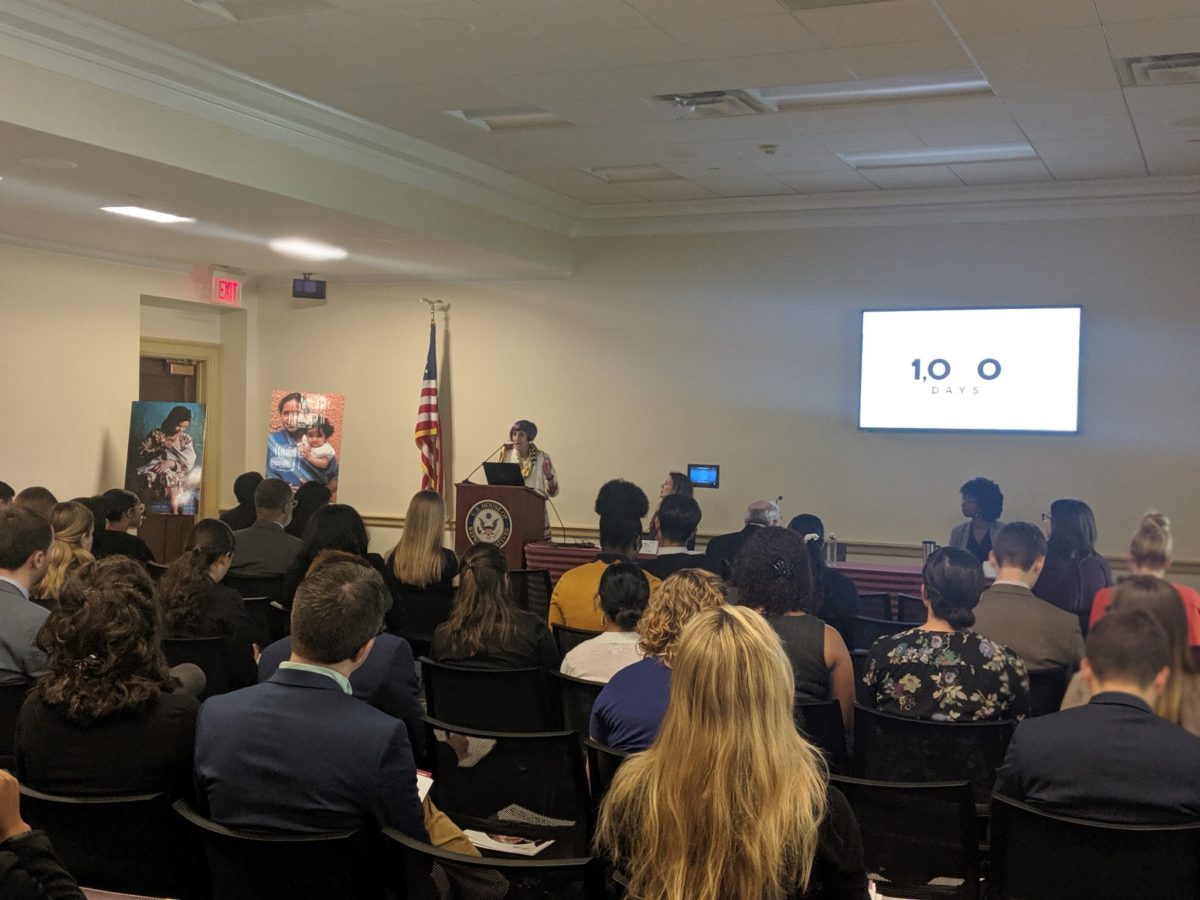
Earlier in May, 1,000 Days hosted a Congressional briefing on the importance of health and nutrition for mothers, babies and young children in the United States and around the world. We were fortunate to work with the Congressional Maternity Care Caucus and the Congressional Baby Caucus on the event. 

To an audience that included staff from Congressional offices, partner organizations and the administration, Members of Congress and panelists spoke about the need to invest and prioritize the well-being of women and children especially during the critical 1,000-day window.  

Highlights 

  • Congresswoman Rosa DeLauro (D-CT) kicked the event off discussing her role as Chairwoman of the Labor, Health and Human Services and Education Appropriations subcommittee, which provides funding for many programs that support moms and young children. As a leader in Congress on issues critical to women, young children and working families, DeLauro spoke to the need to strengthen programs like WIC and invest in maternal and child health services.  
  • Congresswoman Lucille Roybal-Allard (D-CA) told the audience that improving the health outcomes of moms and babies must be a priority in our communities and the halls of Congress. She relayed her efforts to address health inequities in the U.S., including introducing the Newborn Screening Reauthorization Act. Her bill will help expand comprehensive newborn screening programs to identify health conditions early.  
  • Lucy Sullivan, Executive Director of 1,000 Days, moderated the event and provided the audience with an overview of why the first 1,000 days is such a critical time period with a particular focus on how addressing issues like maternal mortality, food insecurity and child stunting begins with strong investments and prioritizing policies that support the health of mothers and young children.
  • Dr. Nicholas Alipui provided the overarching context to why this time period is so foundational to both a child’s development, but also to the ability for communities to thrive. His presentation highlighted for the audience how nutrition impacts a child’s early development and how integrated programs focused on the first thousand days can improve the health of children and communities.
  • Dr. Jessica Nash of Children’s National was the final speaker. She relayed her experience as a pediatrician in Washington D.C. and the barriers her patients and their families face. Highlighting issues from toxic stress, infant mortality and health inequities, Dr. Nash left the audience with an awareness of how these issues impact communities across the U.S., including right here in Washington DC stating “If we are using infant mortality as an indicator of population health, we have some work to do.”

We were honored to host a group of strong advocates who work to support the health of moms and babies and we will continue to engage with policymakers urging them to prioritize brighter futures starting with the first thousand days.