Author: Allyson Garner

What We’re Working On – 1,000 Days Global Policy & Advocacy
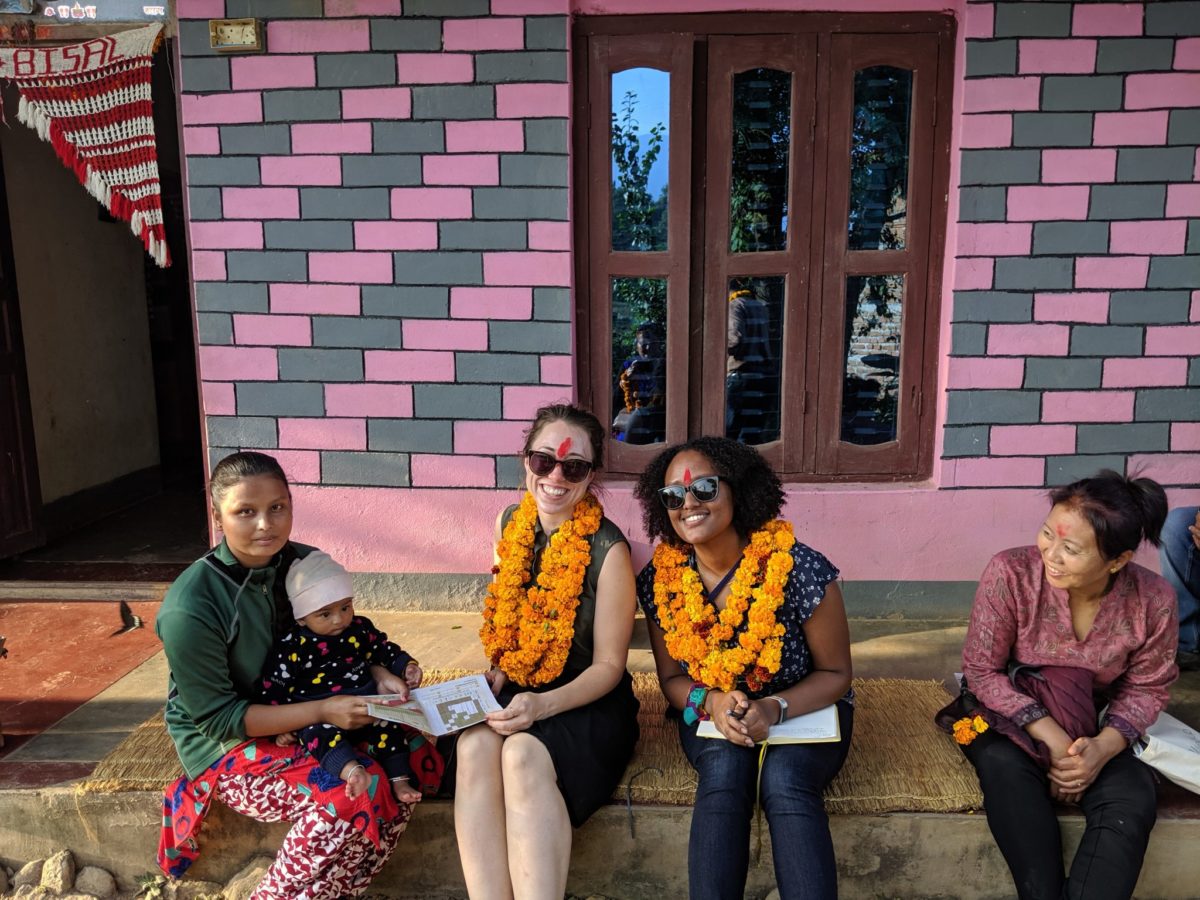
A glimpse into what the 1,000 Days Global Policy & Advocacy Team have been leading and prioritizing over the past 3 months:

A sub-set of ICAN face-to-face attendees gathering before the close of the meeting

International Coalition for Advocacy on Nutrition Face-to-Face

The International Coalition for Advocacy on Nutrition (ICAN) came together in October for a 2-day meeting in Washington DC to begin identifying its advocacy strategy ahead of 2020 and the Nutrition for Growth Summit (N4G) in Tokyo.

1,000 Days and 21 ICAN partners across nine donor markets mapped out opportunities, challenges, and potential ways forward to collaborate in resource mobilization and advocacy efforts for global nutrition, ICAN’s key focus. The agenda focused mainly on developing strategy around the N4G opportunity, leading to open and productive conversations around setting advocacy targets and the key political challenges in respective ICAN markets. Organizations confirmed their commitment to support the Government of Japan’s vision and are finalizing advocacy plans within their respective markets ahead of this key moment for nutrition.

SUN Global Gathering – From Kathmandu to Tokyo

Shortly after the ICAN Face-to-Face, 1,000 Days Global Team members Meaza Getachew and Emma Feutl Kent traveled to Kathmandu, Nepal to attend the Scaling Up Nutrition Global Gathering (SUN GG). Over the course of the week in early November, upwards of 1,000 participants from 73 countries gathered under the theme of “Nourishing People and Planet Together” to commit to improving nutrition for all ahead of the 2020 Tokyo N4G . Made up of 61 countries and 4 India states, SUN is a country-led movement collectively accelerating progress towards the World Health Assembly targets and ending malnutrition in all its forms by 2030.

The Gathering organized both large plenaries and workshop-style group discussions aimed to deepen deliberations to identify the actions all stakeholders will need to undertake to accelerate progress in the fight against malnutrition. It was inspiring to interact with SUN Civil Society Network (SUN CSN) organizations, learning about the great strides they have made for nutrition at the national level, and also some of the challenges that CSNs are facing, such as securing sustainable resources for advocacy.

Gerda Verburg, SUN Movement Coordinator, opens a workshop on integrating WASH and nutrition interventions, led by ICAN partner WaterAid International

With the world off track to meet the 2025 World Health Assembly nutrition targets and the SDG 2 target to end malnutrition in all its forms by 2030, the 2020 N4G Summit is a historic opportunity for nutrition.  2020 will mark the five and 10-year (respective) deadlines for the global goals. The SUN GG was well positioned to reinvigorate the nutrition community as we look towards the Summit and call for ambitious commitments that will transform our fight to end malnutrition in all its forms by 2030.

Suaahara II Project Site Visit

A 1,000 day window infographic at Chyangli Health Facilities in Palungtar, Gorkha district

Following the SUN GG, 1,000 Days’ team members  conducted a 2-day site visit of USAID-supported Suaahara II program. Suaahara II aims to improve the nutritional status of women and children in 40 under-served rural districts of Nepal. This program is often cited as one of the most successful nutrition programs due to its multi-sectoral and integrated approach to service delivery as it combines WASH, agriculture, and sexual and reproductive health interventions along with nutrition-specific interventions such as exclusive breastfeeding. Suaahara lead partner Helen Keller International (HKI) in Nepal put together the 2-day site-visit for the 1,000 Days team.

Key Life Event celebration with 1,000 day mother Sun Mays Kumal and her 11-day old daughter, Ayushal Ishereen

The team visited two districts, Gorkha and Lamjung, and spent some time learning from the local NGOs which partner with national and international organizations for community program implementation. In Gorkha, the team visited a health facility to observe and interact with 1,000 day nutrition and health service providers. Team members also attended a Key Life Event celebration where they were able to observe how truly integrated the Suaahara interventions are. Key Life Events are celebrations that occur within different stages of the 1,000 day journey, such as when a baby starts eating solid foods, and are leveraged to continue counseling the mother on best practices over the 1,000 days window. 1,000-day mothers are shown support by their community by being showered with gifts of vegetables from neighbors’ farms (agriculture is a key intervention of the Suaahara II project).

In Lamjang, a more remote and isolated district than Gorkha, the Suaahara II interventions complemented the region’s varying cultural and religious practices. The team met with and observed peer facilitators, a 1,000-day mothers group, and Female Community Health Volunteers (FCHVs). One of the key takeaways from these meetings was the community’s own pride in progress in their fight against malnutrition – it was refreshing to observe this integrated approach to nutrition programming.

What we’re looking forward to

As 2019 comes to an end, the community is gearing up for a critical year for nutrition in 2020. The 1,000 Days Global Team is feeling newly inspired from being able to strategize more closely with key partners and seeing first-hand the positive impact good nutrition programming can bring to a community. The team is working closely with ICAN partners to finalize advocacy plans ahead of 2020 and is excited to channel this renewed sense of energy into raising and building momentum towards the 2020 Nutrition for Growth Summit. Stay tuned for updates!
Statement on Paid Parental Leave for Federal Workers

1,000 Days applauds the inclusion of 12 weeks of paid parental leave for federal workers in the National Defense Authorization Act (S. 1790) conference agreement. As the nation’s largest employer, this measure will ensure that more than 2 million federal workers can take the time they need to care for their new baby and themselves after childbirth. Thank you to all the Members that championed this provision, including Reps. Carolyn Maloney and Chrissy Houlahan and Senator Brian Schatz. We are grateful for the bipartisan cooperation between Chairmen Adam Smith and Jim Inhofe as well as Ranking Members Mac Thornberry and Jack Reed in including this important provision in the NDAA. We urge all Members to support this provision.

Yet, even as we celebrate this critical step forward, we recognize the work continues to ensure comprehensive paid leave is available to all workers. This provision will not provide paid leave for a pregnant worker on bedrest for her health and that of her baby. It will not provide paid leave for a parent whose child is diagnosed with cancer at 18 months. And unfortunately, it will not provide paid leave to millions of private sector workers in every community. Still, this is an important step in ensuring more workers can access the leave they need.

We encourage Congress and the White House to build on this momentum and pass comprehensive paid family and medical leave. No parent should have to choose between taking time to care for and bond with their child and earning the income they need to support their family. And all women should be able to take the time they need to care for themselves during pregnancy and after childbirth. Access to comprehensive paid leave is critical for the health and wellbeing of moms, babies and their families during the 1,000-day window and beyond.

Health Insurance is Important for a Healthy First 1,000 Days

Health insurance is critical to a healthy first 1,000 days. The foundation for lifelong health is set during this window of time, and health insurance helps ensure all moms and babies receive the care they need to thrive. To learn more, check out 1,000 Days’ new briefs on the importance of health insurance during pregnancy, during the postpartum period and for infants and toddlers.

From November 1 to December 15, families can sign up for health insurance through the Health Insurance Marketplace (HealthCare.gov). Plans purchased through the marketplace are comprehensive and cover the essentials that moms and babies need for a healthy first 1,000 days. Best of all, financial help is available to reduce the cost of coverage and care through federal premium tax credits and cost-sharing assistance.

Despite the importance of health insurance during the first 1,000 days, too many families lack the coverage they need. In September, the Census Bureau released new data showing that the number of children without health insurance coverage in the United States rose significantly in 2018. According to the Georgetown University Center for Children and Families (CCF), this is the second year in a row that uninsurance rates have risen after having fallen for much of the past decade, pointing to a troubling trend.

The new data show that 4.3 million children under the age of 19 were uninsured in 2018—an increase of 425,000 children from 2017. That means 5.5% of all children did not have health insurance coverage last year. And for infants, toddlers and young children ages 0-5, the uninsured rate rose from 4.5% in 2017 to 5.3% in 2018.

Analysis by Georgetown University CCF indicates that some groups of children are faring worse than others. For example, Hispanic children saw the largest jump in uninsurance compared to other races, with an increase of 1 percentage point from 7.7% to 8.7%. Children in the South are the worst off regionally, with the highest rates of uninsured children at 7.7%.

There are many reasons for the increase in the number of uninsured children, including a decline in public coverage for kids through Medicaid and the Children’s Health Insurance Program (CHIP). Medicaid and CHIP coverage fell by more than 2 percentage points among young children, from 40.2% to 38.0%. Changing eligibility rules for children and parents, confusion around the use of public benefits by legal immigrant families, and diminished outreach efforts contributed to this decline.

At 1,000 Days, we know how important health insurance is for the health of our nation’s moms, babies and families. That’s why we’re so concerned about this uptick in the number of uninsured children—and why we fight to support high-quality and affordable health insurance for everyone.

What We’re Watching in Congress – November 2019

With the end of the year swiftly approaching, Members of Congress have indicated they have quite a few priorities they hope to attend to before 2019 draws to a close. Here are a few things we are keeping our eyes on at 1,000 Days:

An upcoming funding deadline

Funding for the federal government is currently set to run out on November 21st, following a short-term extension passed in September. House and Senate Appropriators are still working to finalize an agreement about long-term funding, leading to speculation that another stop-gap bill will be necessary. 1,000 Days will continue to monitor the Appropriations process and urge Members to prioritize funding for programs that support the health of moms and babies everywhere.

Supporting investments in global nutrition

On October 30, the House Foreign Affairs Committee passed a global nutrition resolution sponsored by Rep. Roger Marshall (R-KS) and Rep. Jim McGovern (D-MA). House Resolution 189, which has 131 co-sponsors, recognizes the importance of sustained U.S. leadership to accelerate progress against maternal and child malnutrition and helps to highlight the vital role of nutrition in the 1,000-day window. 1,000 Days is grateful to the House Foreign Affairs Committee Chairman Eliot Engel, Ranking Member Michael McCaul, Representatives Marshall, McGovern and the many co-sponsors of the resolution for shining a light on the foundational role of nutrition in a child’s cognitive and physical development.

Progress on legislation to protect pregnant workers

On October 22, the House Committee on Education & Labor Subcommittee held a hearing on the Pregnant Workers Fairness Act (H.R. 2694). This bipartisan bill requires employers to make reasonable accommodations for pregnant employees and ensures that workers cannot be discriminated or retaliated against for seeking those accommodations. While similar laws are already in place in 27 states, H.R. 2694 would create a national standard ensuring that a woman’s safety and well-being at work are not dependent on her zip code. 1,000 Days submitted a letter to the Committee supporting this important legislation.

This Halloween (and Every Day), Avoid Scary Foods and Beverages for Toddlers

Happy Halloween! As families across the country get ready for a night of trick-or-treating, you may be noticing just how much candy there is around you – and your young children – this time of year. In fact, Halloween candy sales are expected to total almost $9 billion in the U.S. this year.

Halloween is just one day a year, but unhealthy eating is a concern year-round. Developing healthy eating habits and supporting healthy weight gain in the first 1,000 days can help build the foundation for a thriving future. This Halloween, 1,000 Days is highlighting the importance of limiting toddlers’ consumption of scary snack foods and spooky beverages.

Scary Snack Foods

Experts recommend that toddlers eat two to three healthy snacks each day. Snacks can be an important source of nutrients for toddlers’ growth and development, but many toddlers in the U.S. snack on foods that are high in added sugar and sodium and low in nutrients. Too often, parents receive mixed messages about which snacks are best for their toddlers. Many snack foods are marketed as “healthy,” “natural,” “organic” or full of vitamins and minerals, but they also contain too much sugar or sodium. Want to hear something scary? A single-serving pouch of fruit snacks can contain as much as 3 or 4 teaspoons of sugar!

At 1,000 Days, we know how difficult it can be to get your toddler to snack on vegetables, fruits and other nutrient-rich foods. From picky eating, to a lack of time or resources, to the convenience of processed foods – the barriers to healthy snacking can seem endless. One way to incorporate more nutrient-dense foods into your toddler’s snack is to include a fruit or a vegetable combined with food from the grain or dairy group at most snacking occasions. Sliced fresh fruit, vegetables with dip or whole grain crackers with cheese are all good options.

Spooky Beverages

When it comes to a healthy diet for toddlers, what they drink is just as important as what they eat. According to new recommendations from leading medical and nutrition organizations, toddlers should drink water and milk each day. Toddlers don’t need to drink juice to be healthy (it’s best for them to meet their daily fruit intake by eating whole fruit), but consuming a small amount of 100% fruit juice is okay.

The recommendations caution against drinks with added sugars, like flavored milks (e.g., chocolate, strawberry), sugar- and low-calorie sweetened beverages (like sodas, sports drinks and fruit-flavored drinks) and toddler milks (sometimes called transition formula, follow-up formula or growing-up milk – and which contain more sodium and less protein than whole cow’s milk). Some of these beverages – especially toddler milks – are marketed as a good source of nutrients to support healthy growth and development. But, they can contribute to dental cavities and other negative health impacts such as weight gain. Talk about spooky!

Check out 1,000 Days’ new videos for more information on healthy drinks and tips for avoiding spooky beverages.

What We’re Watching in Congress – October 2019

Congress returns to Washington D.C. on October 15 following a two-week district work period. Below are a few things we are monitoring here at 1,000 Days:

Access to Healthy Foods for Young Children Act

Senator Bob Casey (D-PA) recently introduced the Access to Healthy Foods for Young Children Act (S. 2501), which strengthens the Child and Adult Care Food Program (CACFP). CACFP provides nutritious food to many children in childcare settings, helping working parents to provide their children with critical healthy meals during the first 1,000 days of life and beyond. Senator Casey’s proposal increases reimbursements to childcare providers to improve nutrition standards and add an additional optional meal for children who spend long periods of time in childcare. 1,000 Days will continue to support legislation that ensures children get the nutrition they need to grow and thrive.

Committee progress on legislation to support moms, babies, and their families

Two 1,000 Days priority bills are nearing important committee consideration:

  • The Pregnant Workers Fairness Act (H.R. 2694) may soon be given a hearing, an important step in advancing the legislation to the floor. This bipartisan bill requires employers to provide reasonable accommodations to their pregnant employees and protect those employees from retaliation in the workplace. 1,000 Days is monitoring the progress of this bill closely and will continue to advocate key legislators for its passage.
  • Additionally, the House Committee on Ways and Means is considering holding a hearing on the Family and Medical Leave Insurance (FAMILY) Act (R. 1195). This is an opportunity for Members to show their support for comprehensive paid family and medical leave that supports all workers and their families. 1,000 Days is working closely with partners and lawmakers to emphasize the lifesaving potential of paid leave for moms, babies and their families.

More time to come to an agreement on government funding

Last month, Congress passed a Continuing Resolution extending federal funding until November 21. Included in this package were critical reauthorizations of many programs impacting the health of moms and babies, including Community Health Centers and the Temporary Assistance to Needy Families (TANF) program. 1,000 Days will continue to urge Members to prioritize funding for programs that help children everywhere get the healthiest start to life.

Proposed Changes to SNAP Would Increase Food Insecurity

Once again, the Trump Administration is proposing to take away vital nutrition assistance from women, children and their families. Today, 1,000 Days submitted a comment to the U.S. Department of Agriculture (USDA) urging them to withdraw newly proposed changes to the Supplemental Nutrition Assistance Program (SNAP). These changes would make it more difficult for children and their families to get the food they need to thrive.

SNAP is the first line of defense against hunger and poverty for many low-income families in America. As the nation’s largest nutrition assistance program, it helps millions of families put food on the table. Nearly one-third of all children in the U.S. under age 5 participate in SNAP, including 2.2 million infants and toddlers. Research shows that SNAP participation contributes to improved birthweights, lower risks of developmental delays and better health. It also significantly reduces child poverty, with long-lasting benefits. When young children have access to SNAP, they have better health and improved economic self-sufficiency as adults.

The Administration’s proposed changes to SNAP would take away this critical support from struggling individuals and families. USDA estimates that 7.4 percent of all participating households with children would lose access to SNAP – meaning an estimated 1.9 million children (and the adults they live with) will no longer receive the nutrition assistance they need to thrive. USDA’s own analysis predicts that the proposal would increase food insecurity among individuals who lose access to SNAP.

Already, 1 in 7 U.S. households with children under age 6 are food insecure, meaning that they are at times unable to provide enough food for every member of the household. When it comes to our youngest children, a staggering 1 in 6 infants and toddlers live in poverty. This is especially concerning given how critical good nutrition during early life is for lifelong health and well-being. The first 1,000 days offer a unique window of opportunity to build healthier and more prosperous futures – but, the proposed changes to SNAP would put a healthy first 1,000 days out of reach for millions more families in the United States.

1,000 Days is committed to standing strong against the proposed rule and other threats to SNAP. This critical program supports the nutrition, health and economic security of millions of families who rely on it for a healthy first 1,000 days.

What We’re Watching in Congress

Members of Congress spent August in their states and districts, connecting with constituents and their communities. As they return to Washington for a busy month, here are several issues we will be keeping an eye on:

Progress on FY2020 Federal Funding

In July, Congressional leaders and the White House reached a top-line spending deal for FY2020. Current funding for the federal government runs out on September 30, 2019. 1,000 Days will continue to engage with lawmakers and partners to ensure they prioritize investments in the nutrition and health of women and young children, specifically gains in global nutrition funding, the Center for Disease Control and Prevention (CDC) breastfeeding promotion and the WIC Breastfeeding Peer Counselor Program.

Progress on Child Nutrition Reauthorization

Over the recess, Senators were drafting marker bills to be considered in a legislative package reauthorizing the Child Nutrition Act. One such proposal, the Wise Investment in our Children (or WIC) Act (S. 2358) was introduced by Senators Robert Casey (D-PA) and Susan Collins (R-ME). It outlines a number of opportunities to strengthen and expand the Special Supplemental Nutrition Program for Women, Infants and Children, including an expansion of WIC eligibility for new moms to two years post-partum and the streamlining of burdensome certification paperwork. 1,000 Days will continue to educate and engage lawmakers on both sides of the aisle on the importance of nutrition for moms and young children.

E&C hearing on bipartisan maternal health bills

The House Energy and Commerce Health Subcommittee held a hearing on four bills related to maternal health, including two that are supported by 1,000 Days:

  • Mothers and Offspring Maternal Mortality and Morbidity Awareness (MOMMA’s) Act (R. 1897) led by Congresswoman Robin Kelly (D-IL)
  • Quality Care for Moms and Babies Act (R. 1551) led by Congressmen Eliot Engel (D-NY) and Steve Stivers (R-OH)

1,000 Days is encouraged by Congress’ ongoing attention on the need to improve maternal health care. We will continue to share the stories of moms in our community to highlight the importance of quality health care, and to encourage Congressional leaders to make the health and wellbeing of moms a national priority.

Congressional support for breastfeeding

Senator Jeff Merkley (D-OR) and Congressman Adam Schiff (D-CA) introduced resolutions supported by 1,000 Days, acknowledging the important health benefits of breastfeeding for moms and babies (H.Res.545 and S.Res.299). We were excited to see Members of Congress support breastfeeding families and we will keep lifting up the breastfeeding stories of moms in our community.


1,000 Days Announces Interim Executive Director

Contact: Blythe Thomas, [email protected]
202-969-4125

Lucy Martinez-Sullivan leaves to run Feed the Truth

September 17, 2019 (WASHINGTON DC) – 1,000 Days’ Board of Directors announced today that Executive Director Lucy Martinez Sullivan is stepping down from her position to become the Executive Director at nonprofit Feed the Truth. The Board appointed Kathryn Stephens to serve as Interim Executive Director as it prepares for the search for a permanent replacement for Ms. Sullivan.

“I’m so proud of all that 1,000 Days has accomplished under Lucy’s leadership. She was the driving force behind the creation of 1,000 Days and grew the organization into a leading advocacy voice to ensure mothers and babies in the U.S. and across the globe have the nutrition they need to thrive. Thanks to Lucy and the team that she built, 1,000 Days is poised to deliver even greater impact and I look forward to the next phase in the organization’s growth,” said Board President and Chair Dr. Cindy Huang, who is also the vice president of strategic outreach at Refugees International.

Ms. Sullivan helped found 1,000 Days and was the organization’s first executive director. She also currently serves as the co-chair of the Global Nutrition Report, the world’s foremost publication on the state of nutrition. Prior to starting 1,000 Days, Ms. Sullivan worked in philanthropic consulting for CCS, where she led strategy engagements for clients such as the Bill & Melinda Gates Foundation, the Wildlife Conservation Society, and the UN Foundation. She began her career in finance working for Merrill Lynch and later joined L’Oréal as marketing director for some of the company’s best-known global brands.

Ms. Stephens is a seasoned executive and business management professional with more than 20 years of non-profit management experience. In her role as an interim executive, she draws on her expertise in organizational development, business strategy, financial management, executive coaching, capacity building and systems development. In addition, Dr. Nicholas Alipui who serves on 1,000 Days’ Board and has decades of experience working on behalf of the world’s most vulnerable women and children at UNICEF will become even more engaged as an advisor on the organization’s global advocacy work.

“Having served as an Executive Director and in more than a dozen interim executive roles, Kathryn has a proven track record of success in managing leadership transitions for mission-driven organizations. The Board is confident that Kathryn can steward 1,000 Days so that it can continue to advance its ambitious policy and advocacy agenda on behalf of women and children everywhere,” added Dr. Huang.

About 1,000 Days

1,000 Days leads the fight to give mothers and babies in the U.S. and around the world the nutrition they need to thrive. We work with global leaders and grassroots communities of parents to make the 1,000 days between a woman’s pregnancy and her child’s 2nd birthday a window of opportunity to build healthier, brighter futures. For more information, please visit www.ThousandDays.org and follow us on Twitter, Facebook, and Instagram.

New Report Shows Paid Leave is a Public Health Imperative

This Labor Day, we take a day off work to honor and celebrate the contributions of workers in our country. But, today and every day, too many workers are unable to take time away from their jobs to care for themselves and their loved ones. In fact, the U.S. is one of the only countries in the world that does not guar­antee paid leave to new mothers and one of a handful of high-income countries that does not provide paid leave to new fathers. As a result, nearly 1 in 4 women return to work within just 2 weeks of giving birth, putting their health and well-being and that of their infant at risk.

In a new, first-of-its-kind report, 1,000 Days finds that paid leave is a public health imperative with the potential to transform the lives of moms and babies in the U.S. The report analyzed a wide-ranging body of research on family and medical leave and its impact on maternal health and child health and development. The evidence shows that paid leave can improve the health of moms and babies, save lives and enable children to get a strong start to life:

  • Paid leave during pregnancy leads to fewer medical complications for both mom and baby. This includes reduced risk of c-sections, reductions in low birthweight and preterm birth and reduced risk of postpartum depression and anxiety.
  • Paid leave has the potential to save babies’ lives. Researchers estimate that providing 12 weeks of paid leave in the U.S. would result in nearly 600 fewer infant deaths per year—a notable reduction in the face of about 22,000 infant deaths. Importantly, studies find a connection between paid leave and infant mortality, but unpaid leave has no effect.
  • Paid leave supports mothers to breastfeed and breastfeed longer, which improves the health of both mom and baby. A mother is more than twice as likely to stop breastfeeding in the month she returns to work compared to a mother who has not yet returned to work. This means too many babies miss out on breastfeeding’s protection against pneumonia, respiratory infections and sudden infant death syndrome (SIDS) and too many mothers are at greater risk for breast cancer, ovarian cancer and heart disease—leading killers of women in the U.S.
  • Paid leave can help families give their children a thriving start at a time when they are most vulnerable. Research shows that paid leave can help parents cope with the financial stress and demands of caring for a new baby and can reduce the risk of a baby being abused or neglected.

The time has come for policymakers to enact a national paid leave policy that ensures all workers can take the time they need to attend to their health needs and care for their loved ones without jeopardizing their economic security. To best drive improvements to maternal health and child health and development, a paid leave policy must:

  • Provide workers with sufficient time off
  • Cover all employers and all workers
  • Ensure equitable economic security now and in the future
  • Cover medical and family caregiving needs comprehensively

Want to dig deeper? 1,000 Days’ new report, The First 1,000 Days: The Case for Paid Leave in America, is available now.

We also hope you’ll join us in taking the conversation beyond the data. We know that paid leave – or a lack thereof – affects the real lives of moms and babies and their families and communities all over the country. We’ll be sharing the journey of one new mom who, like too many others, returns to work just 2 weeks after giving birth. Check out #BackTooSoon to follow along — on Facebook, Instagram and Twitter.