Category: Uncategorized

Trump Administration “Public Charge” proposal could have disastrous consequences for mothers and babies in the U.S.
1,000 Days calls on the Trump Administration to shelve its proposed public charge rule – a proposal that will cause millions of immigrant women and children to forgo the critical medical, nutrition and housing programs they need to keep their families healthy and safe.

Read 1,000 Days’ Public Comment in opposition to the proposed rule sent to the U.S. Department of Homeland Security on Thursday, December 6, 2018.

“Public charge” is a test used during the citizenship process and this proposed rule expands that test such that the U.S. Government can consider whether a family has used or is likely to use public programs such as the Supplemental Nutrition Assistance Program (SNAP) and Medicaid.

The effects of this rule will be especially disastrous for pregnant women, babies and toddlers. Without the critical nutrition, health care and safe housing support that these programs provide, expectant mothers and young children will be put at risk for malnutrition and serious health problems. In fact, the proposed rule itself notes that “disenrollment or foregoing enrollment in public benefits program by [people] otherwise eligible for these programs could lead to: Worse health outcomes, including increased prevalence of obesity and malnutrition, especially for pregnant or breastfeeding women, infants, or children…”

The damage done by malnutrition and other preventable health conditions during pregnancy and the first two years of a child’s life can be irreversible. Children who are malnourished early in life are at greater risk of failure to thrive. They are more likely to have developmental delays, perform poorly at school and struggle to lead healthy lives. And when children fail to reach their full potential, we all feel the consequences.

It is why basic nutrition and health services for women and young children—regardless of immigration status—must be protected. 1,000 Days is deeply concerned that this Trump Administration proposal will also add to the climate of fear and intimidation that is already causing immigrant families to drop out of critical nutrition and health programs they are legally authorized to use.

1,000 Days urges individuals across America to speak out against this latest Trump Administration attack on immigrant families and we will join forces with partners to mobilize public comments opposing this rule.

Congressional Outlook: What We’re Watching this Fall

Congress has kicked off their fall legislative session with a packed agenda and not many legislative days to accomplish it. Federal funding, judicial nominations, the Farm Bill, possibly legislation to address the opioid crisis are just a few of the priorities competing for limited floor time. 1,000 Days is paying particular attention to a few key issues that are critical for moms, children and families:

Federal Funding
Funding for the federal government expires on September 30, giving Congress just a handful of legislative days to agree to Fiscal Year 2019 spending packages—or to pass a short-term patch. If the House and Senate cannot reach an agreement, there is the potential for a federal government shut down.  1,000 Days is carefully watching and providing feedback as it relates to funding for programs that support moms and their families in the U.S., as well as programs that prevent malnutrition in women and children in developing countries. We will continue to urge Congress to make the needed investments that moms, babies, and their families need to thrive.

Farm Bill
Both the House and the Senate have passed their separate versions of the Farm Bill. The House version includes deep and profoundly negative changes to SNAP that will harm families’ ability to purchase the food they need. The bipartisan Senate version includes small, commonsense changes to SNAP, which are supported by 1,000 Days and the broader nutrition community.

The bipartisan Conference Committee – comprised of 56 members of the House and the Senate – is now working to find a compromise between the two versions. 1,000 Days strongly large supports the Senate version of the Farm Bill and, in partnership with other advocates and experts, will urge rejection of the House’s harmful cuts and instead to move forward with changes that protect access to nutrition assistance.

The Farm Bill also authorizes several international food security programs, which help millions of people around the world survive malnutrition.  1,000 Days has called on the Conference Committee to retain important provisions from the House and Senate bills that would improve and strengthen the programs, allowing them to reach more beneficiaries in more effective ways.

Read 1,000 Days letter to the Conference Committee.

Comprehensive Health Insurance
Comprehensive coverage and protections for people with pre-existing conditions remains at risk. A legal challenge in the Texas Federal District Court, legislation offered by several Republican Senators, and continued regulatory action by the Department of Health and Human Services (HHS) could have a terrible outcome: making comprehensive coverage much more expensive and allowing insurers to charge more or deny coverage for pre-existing conditions.

Many will remember when being a woman, having a child, or being of childbearing age were considered “pre-existing conditions” – we cannot go backwards.

1,000 Days will continue to amplify the voices of moms across the country by advocating for the consumer protections families need to access comprehensive, affordable health care.

Paid Leave
Over the summer, Senator Rubio offered token legislation that does little to achieve the goal of a national paid leave program for all. Meanwhile, new research shows the strong support for paid leave among the American public. 1,000 Days will continue to advocate for a national paid leave policy that supports new moms and their families. We urge Congress to enact legislation that achieves that goal.

Good Nutrition in the First 1,000 Days to Reduce NCDs

Around the world, non-communicable diseases (NCDs) such as heart disease, cancer and type 2 diabetes make up 70% of health-related deaths, posing the largest threat to people’s health globally and costing the global economy trillions of dollars.

Unhealthy diets & sedentary lifestyles are consistently linked to a rise in obesity & diet-related NCDs, and ultimately, premature death – and it’s not just adults that are affected by these conditions. In 2018, an estimated 38 million children under age five were overweight and at greater risk of developing a diet-related non-communicable disease.

More than two-thirds of overweight children live in low and middle-income countries, and many of these countries are dealing with rising levels of obesity alongside other forms of malnutrition, including the crises of childhood stunting, wasting and micronutrient deficiencies. The coexistence of overweight/obesity and undernutrition, known as a “double burden of malnutrition,” can occur in the same country, family and even in the same person.

In fact, being malnourished as a child increases the risk of obesity and diet-related NCDs later in life.

An established – and growing – body of evidence shows that the 1000-day window between a woman’s pregnancy and her child’s 2nd birthday, is a particularly critical period in which how well or how poorly a child is nourished has a profound impact on a child’s health, for the rest of their life.

Good nutrition in the first 1,000 days reduces the risk of malnutrition and chronic, non-communicable diseases.

  • Providing nutrition counseling and health care for women before and during pregnancy reduces the risk of having a malnourished child. Proper nourishment during pregnancy reduces the child’s risk of developing obesity or NCDs later in life. It also helps ensure women gain the appropriate amount of weight and helps prevent gestational diabetes.
  • Promoting, protecting and supporting breastfeeding gives children the best start to life and can prevent NCDs in both mother and child. The natural biological make-up of breastmilk helps regulate food intake and energy balance and reduce the risk of childhood obesity. Breastfeeding also is shown to reduce the risk of breast and ovarian cancers in women.
  • Ensuring access to healthy, nutritious and age-appropriate foods for young children, after exclusively breastfeeding for six months and as a complement to continued breastfeeding, sets the foundation for a child’s healthy eating habits and lifelong health.

This month, the United Nations General Assembly is hosting a High-Level Meeting on NCDs and 1,000 Days will be joining partners in calling on world leaders to commit to action and investment to reduce NCDs. ENOUGH to childhood obesity and the health risk it entails. It’s time for policymakers to step-up, invest and implement policies that promote a healthy first 1,000 days to help reduce all forms of malnutrition and diet-related NCDs.

Please join us in highlighting the importance of good nutrition in the first 1,000 days by following us on Twitter and Facebook this month in the lead up to the UN High-Level Meeting on NCDs on September 27th.

To learn more about policies that can reduce both undernutrition and overweight and obesity, check out the WHO brief on Double-Duty Actions.

82,000 People Standing up for Moms and Babies Worldwide

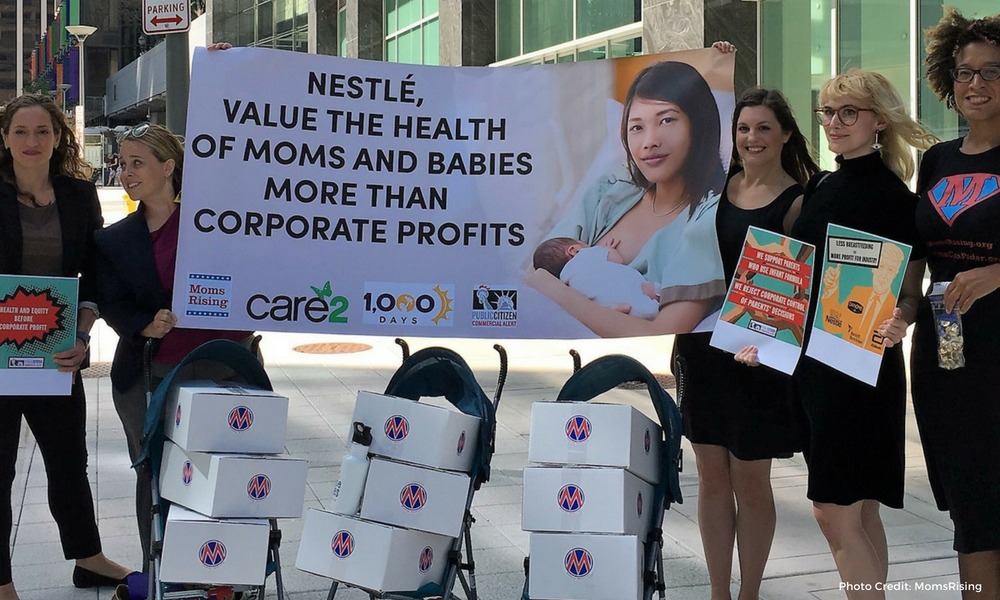
Last week – together with MomsRising, Care2 and Public Citizen – we delivered over 82,000 signatures to Nestle, calling on the company (and the other major infant formula manufacturers) to stop their unethical marketing of infant formula.

Watch the petition delivery.

Thanks to the energy of our collective community and the outrage that infant formula companies are prioritizing their profit over the health of moms and babies – representatives from Nestle agreed to meet with us to receive the petition signatures and hear our concerns.

During the meeting we made two clear asks.

  1. Nestle publicly commit to upholding global rules around marketing infant formula (known as the International Code of Marketing Breastmilk Substitutes) in all countries; and
  2. Nestle publicly commit to cease from lobbying to undermine global efforts to protect breastfeeding.

In the coming weeks we will see if and how Nestle decides to respond to our collective asks. But we are encouraged by the ongoing commitment from individuals and organizations to protect the health of moms and babies worldwide.

An Incredible Opportunity: Breastfeeding & Social Media

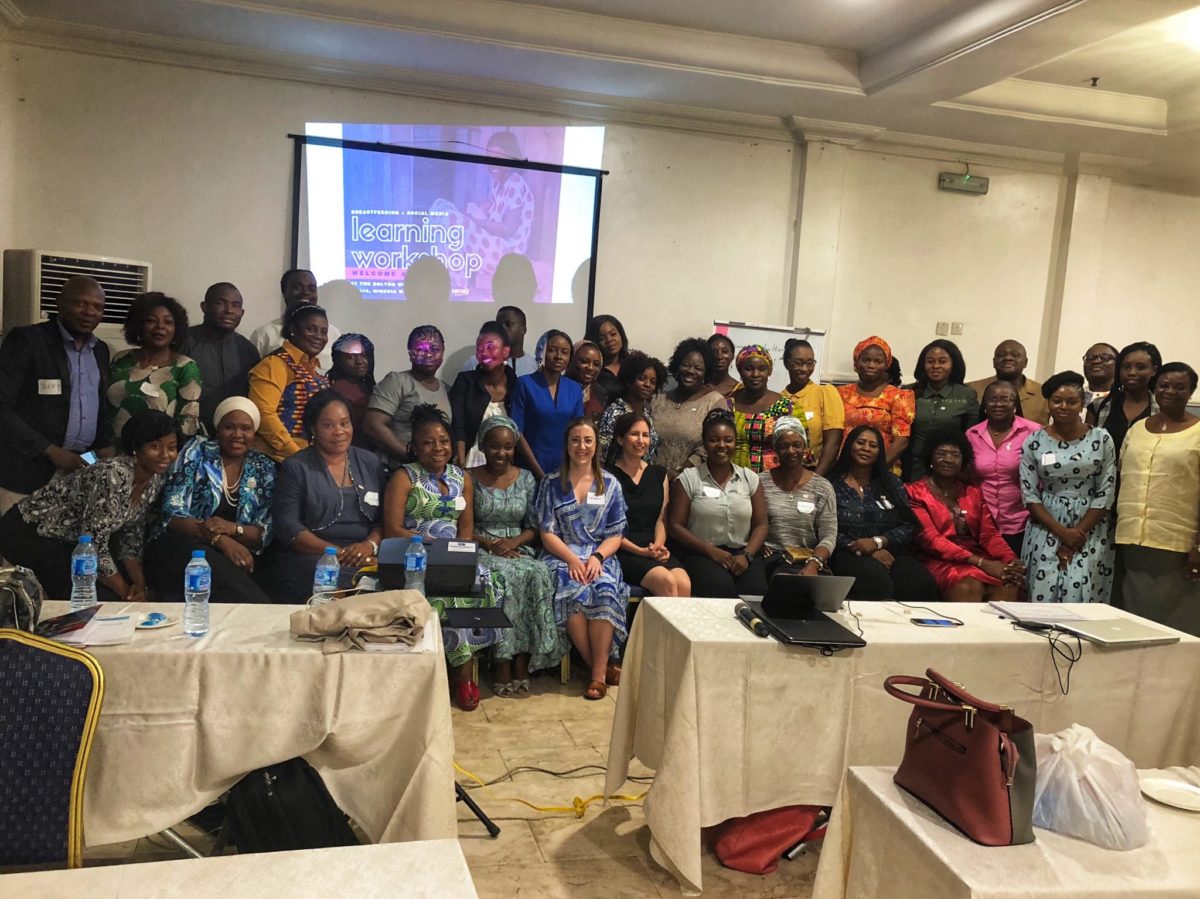
1,000 Days recently organized a day-long workshop in Nigeria with several partners working to promote, protect and support breastfeeding. Together with 43 representatives from 20 different local organizations and governmental agencies, including Alive & Thrive, UNICEF, Nigeria Center for Disease Control, Nigeria Ministry of Health and many others, we sparked a robust discussion about what is possible when using social media to promote breastfeeding. The workshop covered a range of topics and participants brainstormed and worked together to identify what a social media campaign for breastfeeding in Nigeria might look like.

Breastfeeding in Nigeria
While nearly ALL women in Nigeria breastfeed, only 17% of newborns are exclusively breastfed and early initiation of breastfeeding remains well below the regional and global averages. In turn, Nigeria has a high rate of malnourished children, ranking second globally and first in Africa.

Many factors contribute to low rates of exclusive breastfeeding in Nigeria including lack of supportive policies and programs (like no paid maternity leave) and little access to quality health care (very few villages even have a health care facility). But on top of these structural barriers, misconceptions around infant feeding—such as that infants also need water in the first few months—also play a major role in inhibiting exclusive breastfeeding in Nigeria. It is important that widespread public health messages help to break down common misconceptions and encourage a positive environment for mothers to exclusively breastfeed.

The Case for Social Media
Social media platforms – such as WhatsApp, Facebook and Instagram – have a growing influence in Nigeria, with over 20 million active monthly users on Facebook alone. In the Kpaduma community we visited, an estimated 75-80% of women in have mobile phones, a more commonly accessible amenity than even toilets. This is a largely untapped communications platform for public health resources and support.

By amplifying messages on social media about the benefits of breastfeeding, we can increase awareness among a larger population of people online, where increasingly more Nigerians are turning for information.

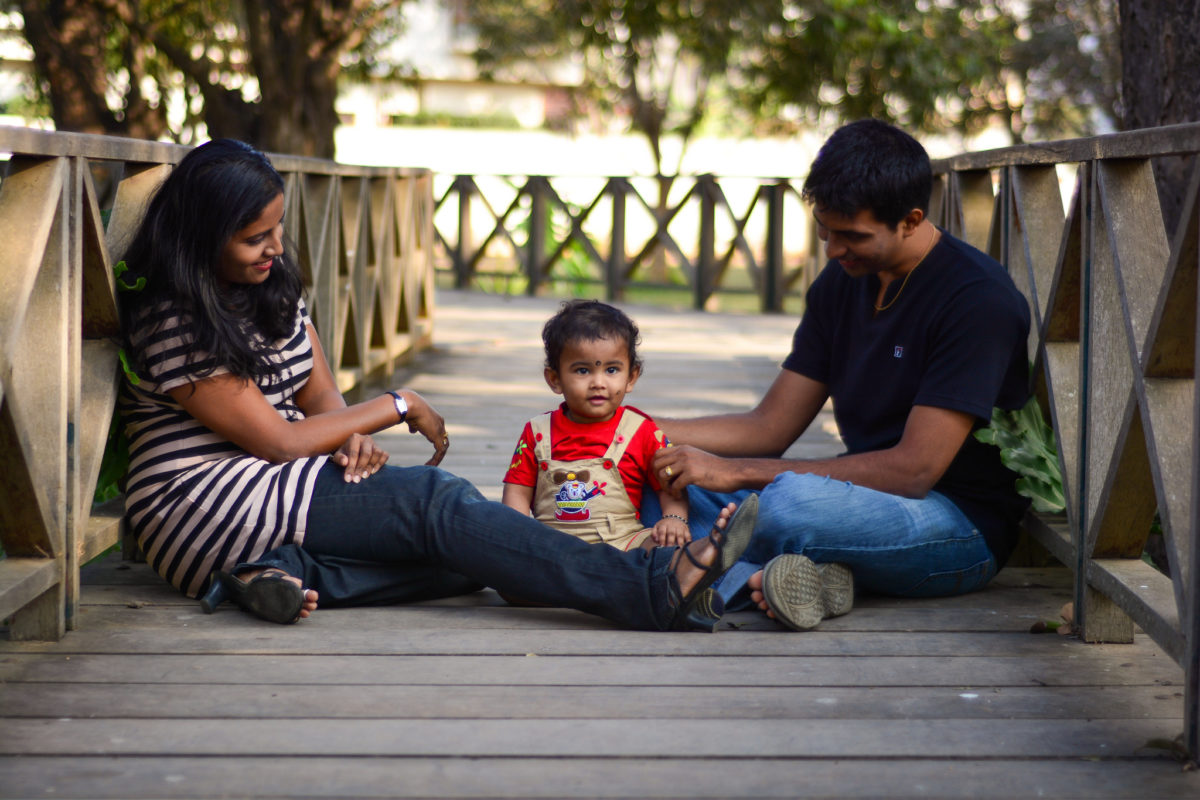
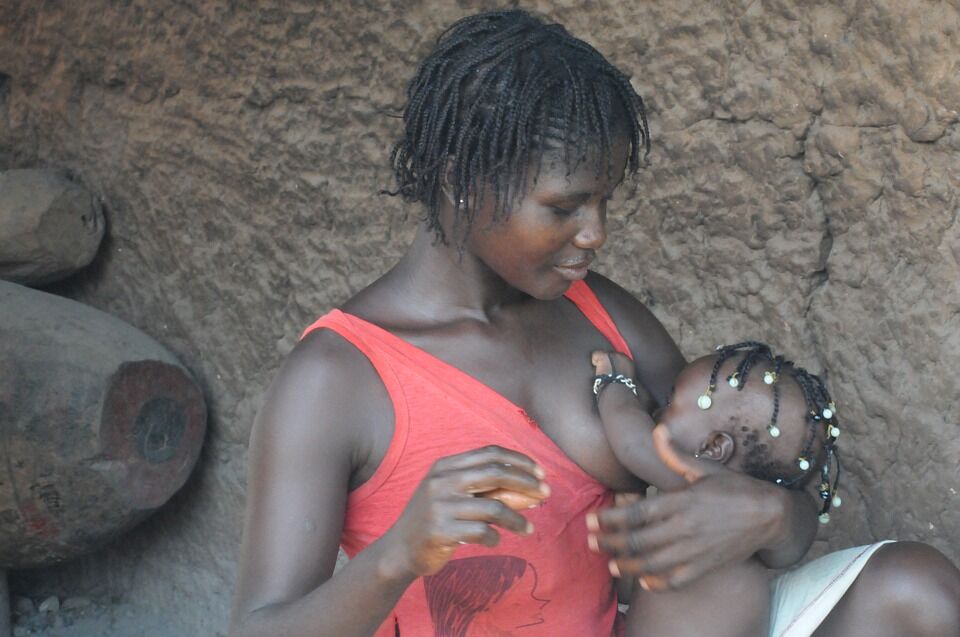
Look closely – the woman pictured in Kpaduma community is holding a mobile phone.

Imagine the possibilities of reaching over 20 million Nigerians with information about the benefits of breastfeeding! This would be a significant step forward in creating an environment for the better supports women to reach their personal breastfeeding goals. By combining the power of social media with ongoing education campaign carried out by local partners, we can reach many more moms (and dads!) with messages that encourage optimal feeding practices.

Our Work
It was with this knowledge in mind that 1,000 Days organized a day-long workshop with partners already working to promote, protect and support breastfeeding in Nigeria. The energy level in the room was incredible – only increasing as the day progressed, with everyone dedicated to utilizing every opportunity to better support moms and babies.

We look forward to continuing to share resources and trainings with these partners. This is clearly just the beginning for this incredibly passionate group of advocates!

When It Comes to Paid Leave, the Details Matter

Yesterday, Senator Marco Rubio (R-Fla.) and Representative Ann Wagner (R-Mo.) released a new paid leave proposal to provide new parents the time they desperately need to care for themselves and their newborns. While the bill – titled the Economic Security for New Parents Act – sounds good, it is flawed for several reasons:

  1. The Rubio bill forces parents to choose between paid time off now and their retirement security later. According to the proposal, parents will have the option to borrow from their own Social Security savings in order to finance their paid leave. But in doing so, they will have to delay the date at which they can begin receiving their retirement benefits. Analysis of this plan indicates it would “erode participants’ retirement security.” It may also have devastating effects on low-wage workers in particular – who are predominantly women and women of color – who are already the least likely to have paid leave through their employer and who will rely heavily on their social security when they retire.
  2. The Rubio bill does not provide sufficient wage replacement. According to the Urban Institute’s analysis, the program would replace roughly half of the earnings for typical new parents. Yet, we know from the few states with paid leave policies that when wage replacement is too low, families cannot afford to take the leave they need.
  3. The Rubio bill only provides paid leave for new parents, excluding the significant needs of America’s workers to care for a loved one or recover from an injury or illness themselves. In fact, 75 percent of people that take unpaid leave through the Family and Medical Leave Act (FMLA) take leave for these reasons.

During the press conference to announce this new bill, Senator Rubio stated: “Issues that are about our children and their families should not be ideological or partisan.” At 1,000 Days we completely agree with this statement, and are encouraged to see that more and more policymakers on Capitol Hill and in state capitals across the country are getting the message that America workers need paid leave. But the details matter.

As the debate around a national paid leave policy continues, we urge Members of Congress to prioritize a comprehensive paid family and medical leave policy – like the FAMILY Act – that helps ALL working parents in the U.S. give their children the strongest start to life.

August is Breastfeeding Month

Today marks the beginning of World Breastfeeding Week (August 1-7) AND National Breastfeeding Month. All month long, people around the world are celebrating the amazing benefits of breastfeeding, while continuing the fight to ensure women have the support they need to breastfeed.

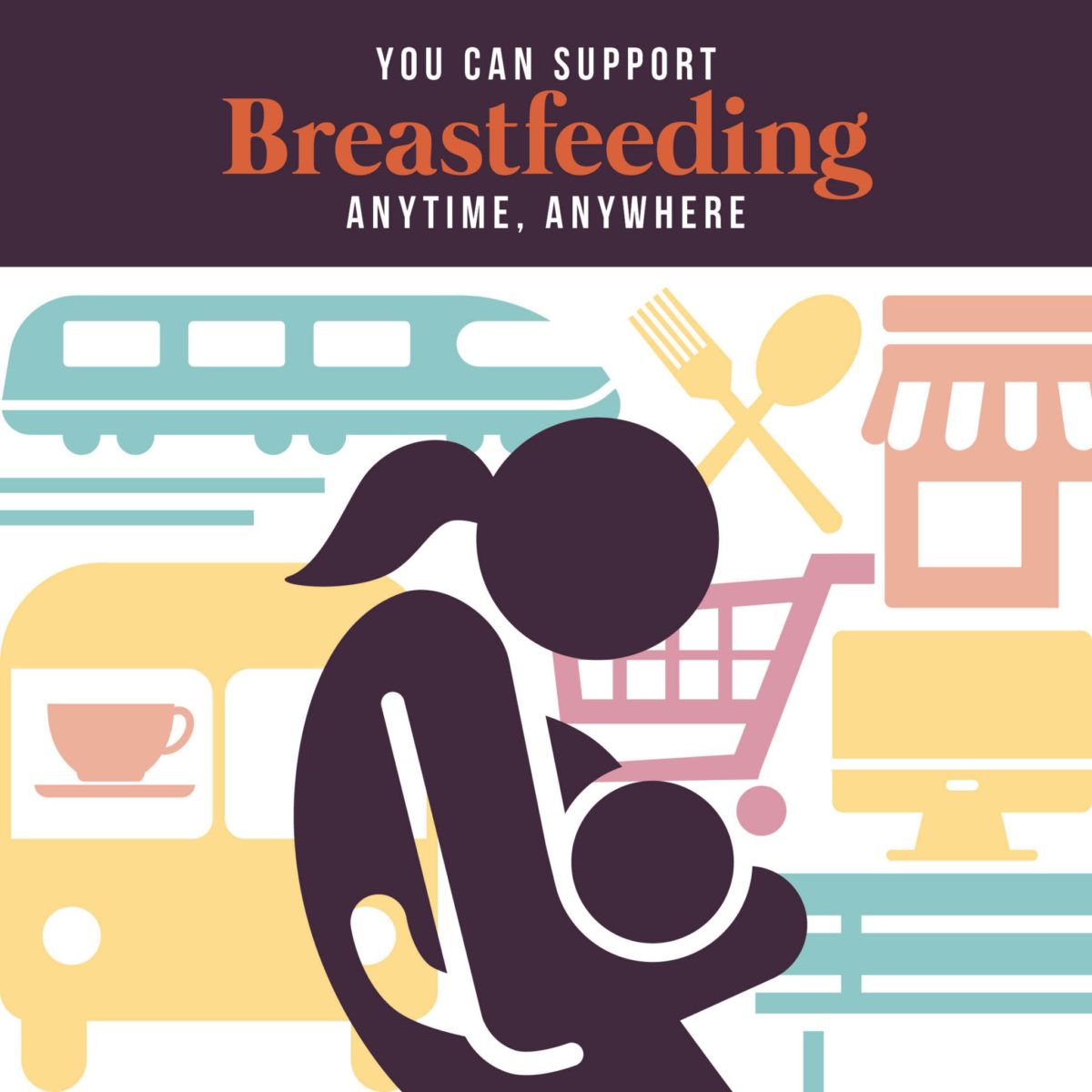
Join us and pledge your support for women to breastfeed anytime, anywhere.

The evidence is clear – breastfeeding saves lives by protecting babies from life-threatening infections and illnesses. If babies were breastfed early and exclusively for the first 6 months, over 820,000 lives could be saved each year!

A world in which women receive support to breastfeed is a world in which women and children thrive. Enabling women to breastfeed for as long as they desire would result in less illness and disease, as breastfeeding plays a key protective role for infant health. Fewer children would die from diarrhea and pneumonia – two of the leading causes of child mortality globally – as well as Sudden Infant Death Syndrome (SIDS)—a leading cause of infant mortality in the U.S.

And it’s not just babies who benefit from breastfeeding. When a mother breastfeeds, she reduces her risk of developing ovarian cancer, breast cancer and heart disease.

Even with all these benefits, there is still a troubling lack of support for breastfeeding women around the world. NO country (including the United States) offers moms the support they need to reach their breastfeeding goals.

This year, let’s commit to creating a world where every mom has the support she needs to breastfeed.

Here’s what you can do: 

  1. Pledge your support for women to breastfeed anytime, anywhere.
  2. Add an “I Support Breastfeeding” Frame to your Facebook Profile.
  3. Share your breastfeeding experience and tell us who supported you on your breastfeeding journey, or who you supported to reach their breastfeeding goals.

No one breastfeeds alone – and we ALL have a role to play in supporting breastfeeding. Thank you for joining us this month to support moms and babies everywhere to have a healthy first 1,000 days.

Interested in learning more? Check out our Inspiration Guide with key facts, stats and graphics that illustrate the benefits of breastfeeding.

1,000 Days on Trump Administration’s Attempt to Block Global Breastfeeding Resolution

Over the last week, breastfeeding has become a front-page issue. On Sunday, July 8 the New York Times published a story about the U.S. Government’s opposition to a World Health Assembly (WHA) resolution to encourage breastfeeding. This story sparked unprecedented media interest and a public outcry against the efforts of both the U.S. delegation and the infant formula industry to undermine global breastfeeding policy and public health.

Many leading maternal and child health organizations issued statements, including the American Public Health Association, the United States Breastfeeding Committee, and a joint statement from the American Academy of Pediatrics and the American College of Obstetricians and Gynecologists.

1,000 Days has long advocated for infant formula manufacturers to adopt more ethical and responsible marketing practices in compliance with the WHO Code of Marketing Breastmilk Substitutes (also known as “The Code”) – and we continue to do so in light of the reports coming out of the World Health Assembly.

Our Executive Director, Lucy Sullivan, was interviewed on CNN’s HLN about the WHA breastfeeding resolution and the big business of infant formula. “You have to remember that the formula industry is a 70 billion dollar a year industry and it’s growing by leaps and bounds.”

Here are some of the other major media outlets covering this story:

Why It’s Important
Breastfeeding is proven to save lives and improve women and children’s health. By improving global rates of breastfeeding, over 800,000 babies’ lives could be saved worldwide every year. Breastfeeding reduces the risk of babies dying from SIDS, respiratory infections, diarrhea and other serious medical conditions. Additionally, breastfeeding has powerful health benefits for moms as it lowers a woman’s risk of breast cancer, ovarian cancer and heart disease.

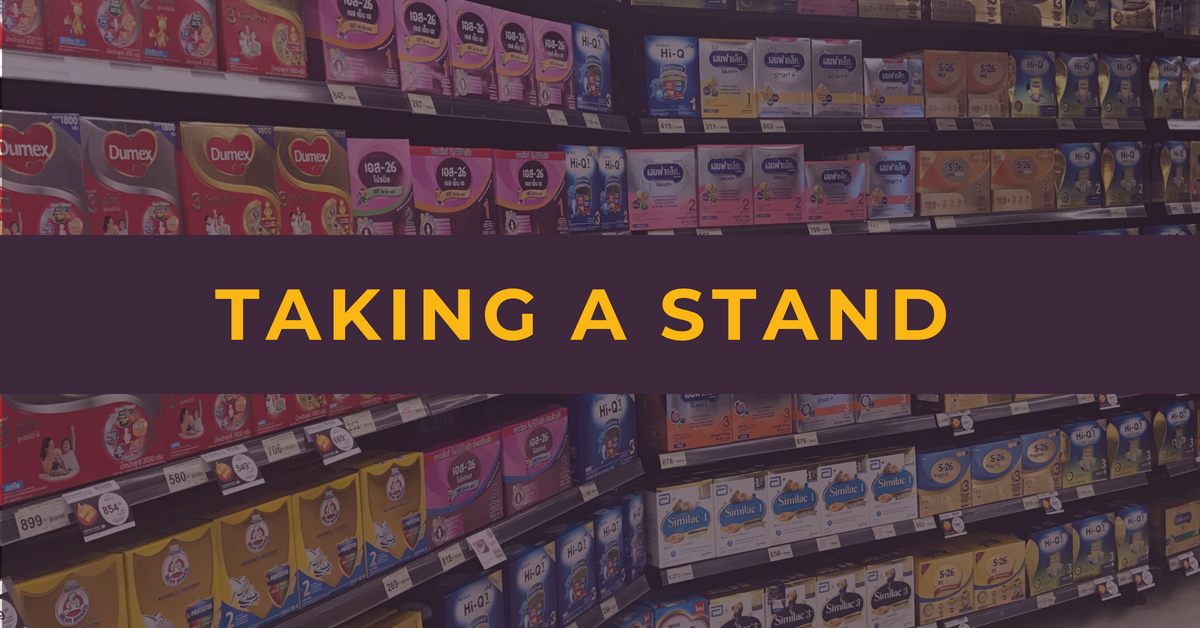
But infant formula is BIG business. While formula is a necessity for many families—which is why the World Health Organization and we at 1,000 Days support the safe use of infant formula when needed—infant formula companies are working to undermine breastfeeding and weaken measures that protect parents and children from the misleading and unethical tactics they use to push their products.

We believe that no government should stand in the way of breastfeeding and no company should interfere with policies to protect the health of women and children.

What We’re Doing
Over the past week, 1,000 Days has spoken out strongly against efforts that seek to push private profit over public health.

Here’s What You Can Do
Your voice matters. Sign our petition and tell infant formula companies to STOP putting their private profits before the health of moms and babies! Your signature will send a strong message that people around the world believe public health comes first. And by sharing this petition with family and friends, you can help us have even more of an impact.

Thank you for standing with us to ensure that moms and babies everywhere get the best start to life.

Calling on Companies to Fully Comply with the Code

Companies that make milk formulas must market their products responsibly to ensure that they do not undermine breastfeeding or infant and child health. As the recent reports by Save the Children UK and the Access to Nutrition Foundation confirm, these six companies have made little progress in curbing the unethical marketing of their products. In fact, none of these companies even acknowledges the Code in its entirety.

Together with partners, we are asking the world’s six largest formula manufacturers—Abbott, Danone, Friesland Campina, Kraft/Heinz, Reckitt Benckiser (fka Mead Johnson) and Nestle—to comply with the rules set out in the International Code of Marketing of Breastmilk Substitutes and subsequent resolutions (“the Code”) and to stop lobbying against measures to protect breastfeeding. Read the full letter here.

Since sending this letter to the heads of the six major infant formula manufacturers, we have received one response to date. Read it here.

Guest Post: When the US opposes evidence-based efforts to promote breastfeeding, what comes next?

The original version of this piece was posted at www.cgdev.org.

On Sunday, The New York Times reported an unexpected confrontation at the World Health Assembly (WHA). The US delegation tried to thwart the passage of a resolution to promote breastfeeding and reduce misleading marketing of breastmilk substitutes.

The Trump administration’s actions elicited widespread condemnation, with statements from the American Academy of Pediatrics and the American College of Obstetricians and Gynecologists, United States Breastfeeding Committee, International Society for Social Pediatrics and Child Health, and 1000 Days.

The events that unfolded at the WHA reflect the Trump administration’s deeply troubling disregard for evidence and its impact on an issue that shouldn’t be controversial: promoting what is best for babies. These actions have nonetheless shined a light on a critical global health issue. Here are three key considerations policymakers should keep in mind to advance much-needed progress on the issue.

Stay focused on the evidence
There is robust, comprehensive evidence around the benefits of breastfeeding. According to a 2016 Lancet series, universal breastfeeding could save the lives of 823,000 children and 20,000 mothers as well as $300 billion a year. There is very strong evidence that in places without access to clean water, using formula transmits water-borne disease and leads to higher infant mortality. An NBER study estimates that in 1981, at the peak of the infant formula controversy, the availability of formula increased infant mortality among mothers without access to clean water, resulting in approximately 66,000 infant deaths in low- and middle-income countries that year.

Dedicate more resources and pursue integrated approaches
There are immense benefits that could be realized from increased resources and prioritization of breastfeeding promotion and support. According to a report by 1,000 Days with WHO, the World Bank, and UNICEF, for every $1 invested in breast-feeding, $35 are created in returns. Promoting and supporting breastfeeding is most effective when integrated with other early childhood development interventions. This includes enabling policies—such as paid leave, which enables women to breastfeed for longer periods of time, increases the likelihood that babies receive check-ups and immunizations, and promotes cognitive and social development by increasing the time parents have to nurture and care for their babies. The Nurturing Care For Early Childhood Development framework provides comprehensive solutions to support early childhood development outcomes from pregnancy to age 3. Governments and societies around the world would reap exponential benefits from integrated approaches to promote health, nutrition, responsive caregiving, early learning, and safety and security.

Put principles over profit
An important dimension of the WHA controversy is the role of formula companies in putting profit over the wellbeing of babies. Violations of the World Health Organization (WHO) International Code of Marketing of Breastmilk Substitutes, which restricts formula companies from directly advertising to mothers and health workers, are rampant. Many of these companies also have robust lobbying efforts.

These practices are disturbing, and the Trump administration and leaders around the world should call upon companies to follow the WHO code. 

Looking ahead
Now is the time for not only the Trump administration, but all those who champion improved wellbeing of babies, to redouble evidence-based efforts to promote and support breastfeeding. A critical part of doing so is putting new energy into approaches to promote nurturing care of the world’s youngest children and invest in the supports their families need to be successful in a modern world.

—

Cindy Huang is a senior policy fellow at the Center for Global Development. Joan Lombardi, PhD, advises a number of organizations on child and family policy. Both Joan and Cindy serve on the board of 1000 Days.