Author:

Calling on Companies to Fully Comply with the Code

Companies that make milk formulas must market their products responsibly to ensure that they do not undermine breastfeeding or infant and child health. As the recent reports by Save the Children UK and the Access to Nutrition Foundation confirm, these six companies have made little progress in curbing the unethical marketing of their products. In fact, none of these companies even acknowledges the Code in its entirety.

Together with partners, we are asking the world’s six largest formula manufacturers—Abbott, Danone, Friesland Campina, Kraft/Heinz, Reckitt Benckiser (fka Mead Johnson) and Nestle—to comply with the rules set out in the International Code of Marketing of Breastmilk Substitutes and subsequent resolutions (“the Code”) and to stop lobbying against measures to protect breastfeeding. Read the full letter here.

Since sending this letter to the heads of the six major infant formula manufacturers, we have received one response to date. Read it here.

Guest Post: When the US opposes evidence-based efforts to promote breastfeeding, what comes next?

The original version of this piece was posted at www.cgdev.org.

On Sunday, The New York Times reported an unexpected confrontation at the World Health Assembly (WHA). The US delegation tried to thwart the passage of a resolution to promote breastfeeding and reduce misleading marketing of breastmilk substitutes.

The Trump administration’s actions elicited widespread condemnation, with statements from the American Academy of Pediatrics and the American College of Obstetricians and Gynecologists, United States Breastfeeding Committee, International Society for Social Pediatrics and Child Health, and 1000 Days.

The events that unfolded at the WHA reflect the Trump administration’s deeply troubling disregard for evidence and its impact on an issue that shouldn’t be controversial: promoting what is best for babies. These actions have nonetheless shined a light on a critical global health issue. Here are three key considerations policymakers should keep in mind to advance much-needed progress on the issue.

Stay focused on the evidence
There is robust, comprehensive evidence around the benefits of breastfeeding. According to a 2016 Lancet series, universal breastfeeding could save the lives of 823,000 children and 20,000 mothers as well as $300 billion a year. There is very strong evidence that in places without access to clean water, using formula transmits water-borne disease and leads to higher infant mortality. An NBER study estimates that in 1981, at the peak of the infant formula controversy, the availability of formula increased infant mortality among mothers without access to clean water, resulting in approximately 66,000 infant deaths in low- and middle-income countries that year.

Dedicate more resources and pursue integrated approaches
There are immense benefits that could be realized from increased resources and prioritization of breastfeeding promotion and support. According to a report by 1,000 Days with WHO, the World Bank, and UNICEF, for every $1 invested in breast-feeding, $35 are created in returns. Promoting and supporting breastfeeding is most effective when integrated with other early childhood development interventions. This includes enabling policies—such as paid leave, which enables women to breastfeed for longer periods of time, increases the likelihood that babies receive check-ups and immunizations, and promotes cognitive and social development by increasing the time parents have to nurture and care for their babies. The Nurturing Care For Early Childhood Development framework provides comprehensive solutions to support early childhood development outcomes from pregnancy to age 3. Governments and societies around the world would reap exponential benefits from integrated approaches to promote health, nutrition, responsive caregiving, early learning, and safety and security.

Put principles over profit
An important dimension of the WHA controversy is the role of formula companies in putting profit over the wellbeing of babies. Violations of the World Health Organization (WHO) International Code of Marketing of Breastmilk Substitutes, which restricts formula companies from directly advertising to mothers and health workers, are rampant. Many of these companies also have robust lobbying efforts.

These practices are disturbing, and the Trump administration and leaders around the world should call upon companies to follow the WHO code. 

Looking ahead
Now is the time for not only the Trump administration, but all those who champion improved wellbeing of babies, to redouble evidence-based efforts to promote and support breastfeeding. A critical part of doing so is putting new energy into approaches to promote nurturing care of the world’s youngest children and invest in the supports their families need to be successful in a modern world.

—

Cindy Huang is a senior policy fellow at the Center for Global Development. Joan Lombardi, PhD, advises a number of organizations on child and family policy. Both Joan and Cindy serve on the board of 1000 Days.

A Year at 1,000 Days

Before I joined 1,000 Days, I already knew that this was a team I wanted to be a part of. I wanted to continue to work on nutrition and what better place than at 1,000 Days, an organization led by women and dedicated to improving nutrition and ensuring women and children have the healthiest first 1,000 days. I was able to join 1,000 Days for a year as a Global Health Corps (GHC) Fellow, which has provided me a great community of public health advocates, alongside the opportunity to continue to advocate for nutrition.

I started my work on nutrition advocacy by working for the Zambia Civil Society Scaling up Nutrition Alliance (CSO-SUN) in 2014. I was motivated by my own first-hand experience with the heavy price of inequitable health services and I wanted to be a part of efforts that improve health systems as well as people’s lives.

Working in a country where malnutrition rates are among the highest globally, I became aware of the negative effects of malnutrition and the ways in which it continues to trap people in poverty. Malnutrition exerts pressure on health care systems and can deny children basic opportunities to maximize their potential. Stunting, a chronic form of malnutrition that impairs cognitive and physical growth, affects 151 million children worldwide. In Zambia alone, 40% of all children are stunted. I dedicated my time in Zambia advocating to improve the nutrition of these children to policymakers.

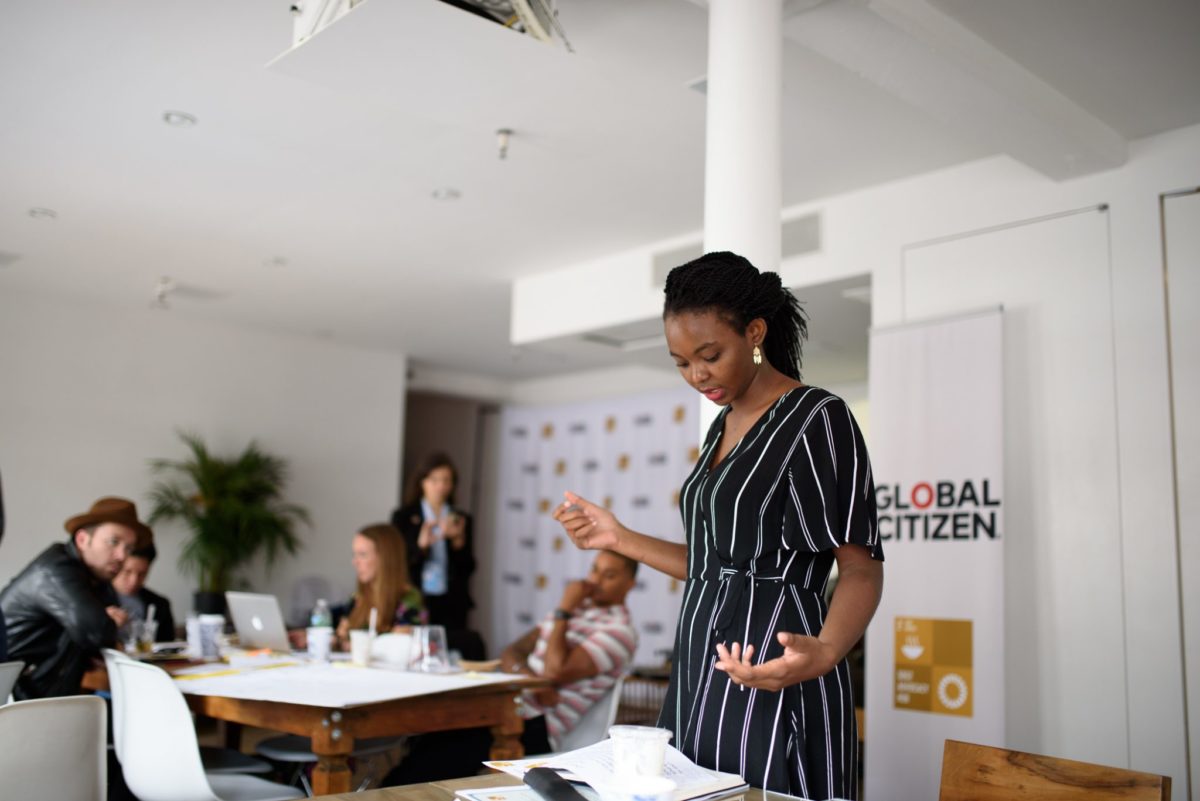
At 1,000 Days, I was also able to bring my campaign efforts as a Youth Advocate with Global Citizen to my work. This community allowed me to have a global stage and to share my own stories and those of the people I worked with in Zambia. I was honored to speak about Good Food and Nutrition at a side-event during the United Nations General Assembly and help launch the #Bethegeneration campaign at the UN Commission on the Status of Women.

It was an exciting time to be with 1,000 Days. I was able to be a part of two groundbreaking events in the global nutrition movement: the Global Nutrition Summit in Milan, Italy and the Scaling Up Nutrition (SUN) Global Gathering in Abidjan, Cote, D’Ivoire. In Milan, the Global Nutrition Summit brought forth new commitments from new funders. In Abidjan, I was united with hundreds of people from around the world working towards a malnutrition free world.

I’ve had the chance to deepen my understanding of how nutrition impacts development,  including exploring the linkages between nutrition and other sectors. During World Water Week, I explored how poor WASH systems and a lack of access to good nutrition, combined with conflict, can undermine the resilience of already vulnerable populations.

As my year at 1,000 Days comes to a close, I am reminded of my first day at 1,000 days. I moved from Zambia to Washington, DC for this opportunity and my excitement, anticipation and optimism were at a high. The time at 1,000 Days did not disappoint. It allowed me to apply a different lens to my advocacy and awakened me to the global scale of the problem of malnutrition — and how much remains to be done. But despite this challenge, I have also seen the many advocates and coalitions that have committed themselves to this work, making me optimistic about the future of the world’s children.

P.S. Watch Mwandwe chat more about her experience at 1,000 Days here.

Senate Passes Bipartisan Farm Bill

1,000 Days commends the Senate for passing the Farm Bill – a balanced and bipartisan piece of legislation that helps secure the food and nutrition needs of millions of Americans, including families with young children. In particular, the Senate Farm Bill affirms the important role that the Supplemental Nutrition Assistance Program (SNAP) plays in addressing hunger and poverty.

However, the work is not yet done. Last week, the House of Representatives passed a partisan Farm Bill that undermines SNAP and will increase food insecurity among low-income families. If enacted, the House bill will mean more children in America will go hungry.

As the members of the Senate conference committee sit down with their House counterparts to negotiate a final Farm Bill, they must honor the thoughtful and bipartisan Senate process. 1,000 Days will continue to work with our partners to stand strong in opposition to the House SNAP provisions and call on policymakers to craft a final Farm Bill that meets the needs of women and young children.

Millions Watch 1,000 Days’ Newest Videos For Parents

Good nutrition during a child’s earliest years sets the foundation for lifelong health. It provides the essential building blocks for brain development, healthy growth and a strong immune system. However, too many children in the U.S. are not eating a healthy diet. Fewer than half of all children between ages one and two eat a vegetable on a given day, and 15% of children between ages one and two are not getting enough iron, an essential nutrient for proper brain development.

In order to get credible information into the hands of parents and caregivers, 1,000 Days has partnered with experts to bring together the evidence-based information and practical strategies on what, when, and how to feed infants and toddlers.

“The benefits of proper nutrition in a child’s earliest years have far-reaching consequences, but as a mom, I know firsthand how hard it can be to make sense of the conflicting advice coming from our doctors, family members and the internet. That’s why I’m so thrilled share this resource with parents and empower them to more confidently feed their young children,” said Lucy M. Sullivan, executive director of 1,000 Days.

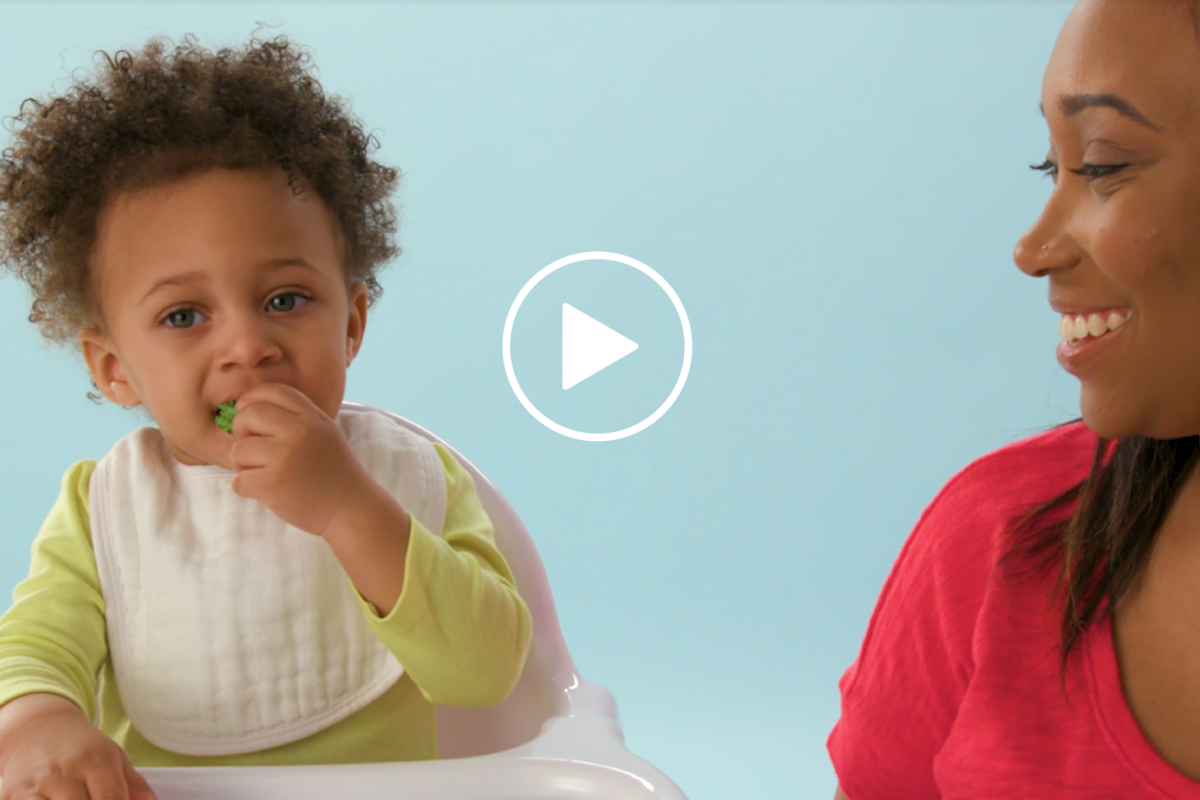
Building upon CDC’s new evidence-based website on infant and toddler feeding – as well as other resources such as the Healthy Eating Research report “Feeding Guidelines for Infants and Toddlers” – 1,000 Days has developed a series of bite-sized “how to” videos to bring the recommendations to life for parents and caregivers.

An organization by moms, for moms, 1,000 Days understands parents need quick, practical and trustworthy advice. 1,000 Days is kicking off with 12 videos on one of the biggest questions parents have: how to introduce solid foods. The videos cover a range of topics – from the signs to look for to know your baby is ready to start eating food, to tips on how to cook nutritious first foods for your baby. 1,000 Days has developed these videos to reach a wide audience and help parents and caregivers feel confident about feeding their young children.

In just one month, the videos have already reached more than 3.5 million of people and been viewed more than 1.2 million times. In addition to being watched and shared by millions of parents across the U.S., the videos have also attracted the attention of media like Fatherly, influencers like The Mama Notes and many partners in the early childhood development space, including state and local WIC agencies that are now using the videos as resources for parents and staff alike. Parents are hungry for trusted and practical information, and 1,000 Days sees real potential to expand upon this initial work as outlined in this case study.

This first video series is just the start. 1,000 Days intends to build a library of resources to support parents with information on eating and feeding throughout the 1,000-day journey from a woman’s pregnancy through her child’s 2nd birthday.

Nurturing Care Framework Provides Opportunity to Invest in Nutrition

Ensuring the health and potential of a child starts in pregnancy and continues throughout life. In fact, a child’s brain and body grow more rapidly in the 1,000-day window between pregnancy and age two than at any other point in human development. To take advantage of that window of opportunity, various “nurturing care” supports including good health, adequate nutrition, responsive caregiving, safety and security, and early learning opportunities are needed.

Recognizing these key components of child development, the Nurturing Care Framework is being launched by the World Health Organization (WHO) and UNICEF at this year’s World Health Assembly (WHA). This framework builds off the evidence in the Lancet series on Advancing Early Childhood Development (ECD) and calls for integrated action for ECD. It brings together stakeholders from across sectors to put forth a roadmap for policies and programs that promote healthy, thriving children.

Nutrition for the win
As a pillar of the Nurturing Care Framework, good nutrition is essential to early childhood development. It is the fuel that children need to survive and thrive. When combined with other ECD interventions like good health and responsive care, the effect is even greater. Luckily, there is a single nutrition intervention that provides adequate nutrition, good health and responsive care, all wrapped into one: breastfeeding.

Breastmilk: the ultimate superfood
Breastmilk is the most nutritionally and immunologically potent food for infants – and the health and brain-boosting benefits of breastfeeding extend into toddlerhood. Breastmilk fuels brain development, protects against disease and illness and sets a child upon a path toward better health and a more prosperous future.

In fact, breastfeeding has the single largest potential impact on child survival of any preventive intervention. As a baby’s first vaccine, breastmilk boosts the child’s immune system and has an enormous impact on preventing diseases such as diarrhea and pneumonia. Breastfeeding also reduces the risk of non-communicable diseases and decreases the prevalence of overweight, obesity and diabetes later in life.

Breastfeeding involves a great deal of mother-child interaction and nurturing, providing an opportunity for responsive care. Babies’ brains are shaped not only by the quality of the nutrition they get, but also by the quality of the experiences and interactions they have with caregivers. The physical act of breastfeeding strengthens a baby’s sensory and emotional circuitry, critical for cognitive and socio-emotional development.

It’s clear that in many ways, breastfeeding helps level the playing field to give every child a fair start in life, enabling millions of young children to thrive and reach their full potential. Improving breastfeeding rates can have an enormous impact on a nation’s economy by increasing productivity, cutting health care costs and saving lives.

Policymakers must step up
The benefits are clear and yet women in every corner of the world face too many barriers to start and continue breastfeeding successfully. Recent analysis by the Global Breastfeeding Collective, led by WHO and UNICEF, shows that no country is adequately supporting moms to breastfeed.

Policymakers interested in improving early childhood development outcomes and enacting the Nurturing Care Framework should invest in breastfeeding as an invaluable first step.

The investment for breastfeeding is relatively low-cost but high-impact. For only $4.70 per newborn, policymakers can finance:

  • improved access to skilled breastfeeding counseling
  • better practices in maternity facilities
  • national breastfeeding education efforts
  • development of paid family leave policies
  • implementation of the International Code of Marketing of Breastmilk Substitutes to restrict the unethical promotion of infant and toddler formula.

Setting the foundation for development
When we don’t nourish a child’s potential in the first 1,000 days, we all feel the consequences. Many of the issues with which policymakers’ struggle—from educational achievement gaps, to higher healthcare costs, to deepening disparities—have their roots in how well a child fares during the first years of life.

World leaders should not pass up the opportunity to support breastfeeding and nutrition as part of their agenda on early childhood development and in their efforts to build a more equitable and healthy world.

1,000 Days joined other civil society organizations in calling for a global framework for nurturing care to include health diets. Read the full statement here.


Statement on President Trump’s proposal to cut funding for CHIP

This week the White House proposed to cut $7 billion from the Children’s Health Insurance Program (CHIP). This directly contradicts a bipartisan bill passed by Congress and signed into law by the President just a few months ago that extended funding for CHIP. This abrupt about-face threatens the health insurance coverage for the more than 9 million children and roughly 370,000 pregnant women across the country who rely on CHIP.

The proposed cuts to CHIP will threaten states’ ability to maintain their CHIP program and fundamentally undercuts the carefully constructed bipartisan agreement from earlier this year. Specifically, the President’s proposed cuts would come from the funds set aside to ensure stability for CHIP, including funds that help states cover unexpected enrollment in the program, such as after a natural disaster or an economic downturn. The White House proposal is disconnected from the realities facing America’s families and puts children’s health coverage at risk.

1,000 Days strongly opposes the White House rescission package. America’s families already spent far too many months wondering and worrying if CHIP would be there for their children’s health care needs. Congress and the White House ultimately came through and put in place a strong funding package to make sure CHIP could meet families’ needs. We cannot go backwards.  Congress must make the health and well-being of young children and their families a priority. To do this, it must reject the rescission package proposed by the White House and maintain the current, bipartisan funding for CHIP.